Home Insurance, coverage types
Landlord Insurance: What It Covers, What It Costs, and Why a Homeowners Policy Is Not Enough for a Rental
The day a tenant moves in, your homeowners policy may stop covering your home. Landlord insurance costs about 25% more than a standard homeowners policy — and it exists for a reason.
- By
- Ella H.
- Published
- Updated
- Reading time
- 16 min read
Key takeaways
- A standard homeowners policy does not cover a home that is rented out. Once a tenant moves in, you need a landlord policy.
- Landlord insurance generally costs about 25% more than a standard homeowners policy for the same property, according to the Insurance Information Institute.
- A landlord policy has three parts: dwelling coverage for the structure, liability coverage if someone is hurt on the property, and loss of rental income while the home cannot be rented after a covered loss.
- Your tenant's belongings are not covered by your landlord policy. Tenants need their own renters insurance.
- A standard landlord policy does not cover short-term rentals such as Airbnb. That needs an endorsement or a dedicated short-term-rental policy.
In this guide
- What landlord insurance covers: the three parts
- What landlord insurance does NOT cover
- Landlord insurance vs. homeowners insurance
- DP-1, DP-2, DP-3: the three policy forms
- The Airbnb trap: short-term rentals are not covered
- Is landlord insurance required?
- Add-ons worth pricing, and how to keep the cost down
- The bottom line
- Frequently asked questions
- Sources

The day a tenant moves in, your homeowners policy may stop covering your home. That is the fact most new landlords learn too late. A standard homeowners policy is written for a home you live in yourself. Once someone else lives there and pays you rent, the policy may not cover losses at all — and your mortgage lender may not accept it either 1.
Landlord insurance exists to fill that gap. It is a separate policy built for a rented home, and it generally costs about 25% more than a standard homeowners policy for the same property, according to the Insurance Information Institute 1. That 25% figure is the one reliable cost rule in a topic full of conflicting dollar numbers, and it is the right way to think about the price: take what you would pay to insure the home as your own residence, add roughly a quarter, and you are in the right range.
This guide explains what landlord insurance covers, what it does not cover, how it differs from a homeowners policy, the three policy forms you will be offered, the short-term-rental trap that catches Airbnb hosts, and whether the law actually requires it. Every claim in this guide comes from a named source, and where the sources disagree — above all on price — this guide says so instead of picking a number.
What landlord insurance covers: the three parts
A landlord policy has three main parts. Together they cover the building, the people who use it, and the rent it produces.
1. Dwelling coverage: the structure itself. This pays for physical damage to the building from fire, lightning, wind, hail, ice, snow, or other covered perils 1. If a fire damages the kitchen, a storm tears off part of the roof, or a frozen pipe bursts and floods a wall, dwelling coverage pays to repair or rebuild the structure. This is the largest part of the policy, and it is the part your mortgage lender cares about most, because the building is the security for the loan.
2. Liability coverage: if someone is hurt. This pays legal fees and medical expenses if a tenant or a guest is hurt on the property 1. If a tenant falls on a broken step, a visitor is hurt by a falling branch, or a child is injured on a faulty railing, liability coverage pays the medical bills and the cost of defending you if the injured person sues. Liability is the part of the policy that protects your savings and your other assets, because a single serious injury claim can cost far more than any repair bill.
3. Loss of rental income: the rent you lose while the home is repaired. If a covered loss makes the property unlivable — a fire, for example — this part pays the rent you lose while the home cannot be rented during repair or rebuilding, for a specific period set out in the policy 1. This is the coverage that keeps a landlord's mortgage paid while the home sits empty and under repair. Without it, a landlord pays the mortgage, the taxes, and the repair costs all at once, with no rent coming in.
There is a fourth, smaller part that many landlords miss. A landlord policy also covers personal property that you leave on the site for maintenance or tenant use — appliances you own, a lawnmower, a snow blower, tools kept in the garage 1. If the home burns, the policy pays for the refrigerator you supplied as well as for the walls around it.
What the policy does not cover is your tenant's property. A tenant's furniture, clothing, electronics, and other personal belongings are not covered under your landlord policy at all 1. That is the tenant's responsibility, and it is why landlords often require tenants to buy renters insurance as a condition of the lease. If a tenant loses everything in a fire and has no renters insurance, there is nothing in your policy that pays them — and the tenant may look to you for help you are not insured to give.
What landlord insurance does NOT cover
Knowing the exclusions is as important as knowing the coverages, because the exclusions are where landlords get surprised. These are the main ones:
Your tenant's belongings. As above, the tenant's personal possessions are not covered. Require renters insurance in the lease, and check that the tenant actually buys it 1.
Maintenance and wear and tear. A landlord policy pays for sudden, accidental damage — a fire, a storm, a burst pipe. It does not pay for a roof that wears out after thirty years, a furnace that dies of old age, or a carpet that is simply worn down. Those are maintenance costs, and they are the landlord's to pay.
Flood and earthquake. Like a standard homeowners policy, a standard landlord policy does not cover flood damage or earthquake damage. Each needs a separate policy or endorsement 2 3. If the rental sits in a flood zone, that is a separate decision — and a separate cost — on top of the landlord policy.
Non-payment of rent. Loss of rental income covers rent lost because the home cannot be rented after a covered loss. It does not cover a tenant who simply stops paying. That is rent-guarantee cover, a separate product, not part of a standard loss-of-rent clause 2 3.
Vacant-property theft, in some forms. Some landlord policy forms limit or exclude theft when the property sits vacant. If the home will be empty between tenants for a long stretch, or during a major renovation, tell your insurer — a vacancy endorsement may be needed 2.
The pattern is worth naming plainly: a landlord policy covers sudden damage to the building, injuries on the property, and rent lost to a covered loss. It does not cover slow damage, the tenant's things, the tenant's failure to pay, or water and earth perils that need their own policies. Read the exclusions page before you sign, and ask your agent to point out anything that surprises you.
Landlord insurance vs. homeowners insurance
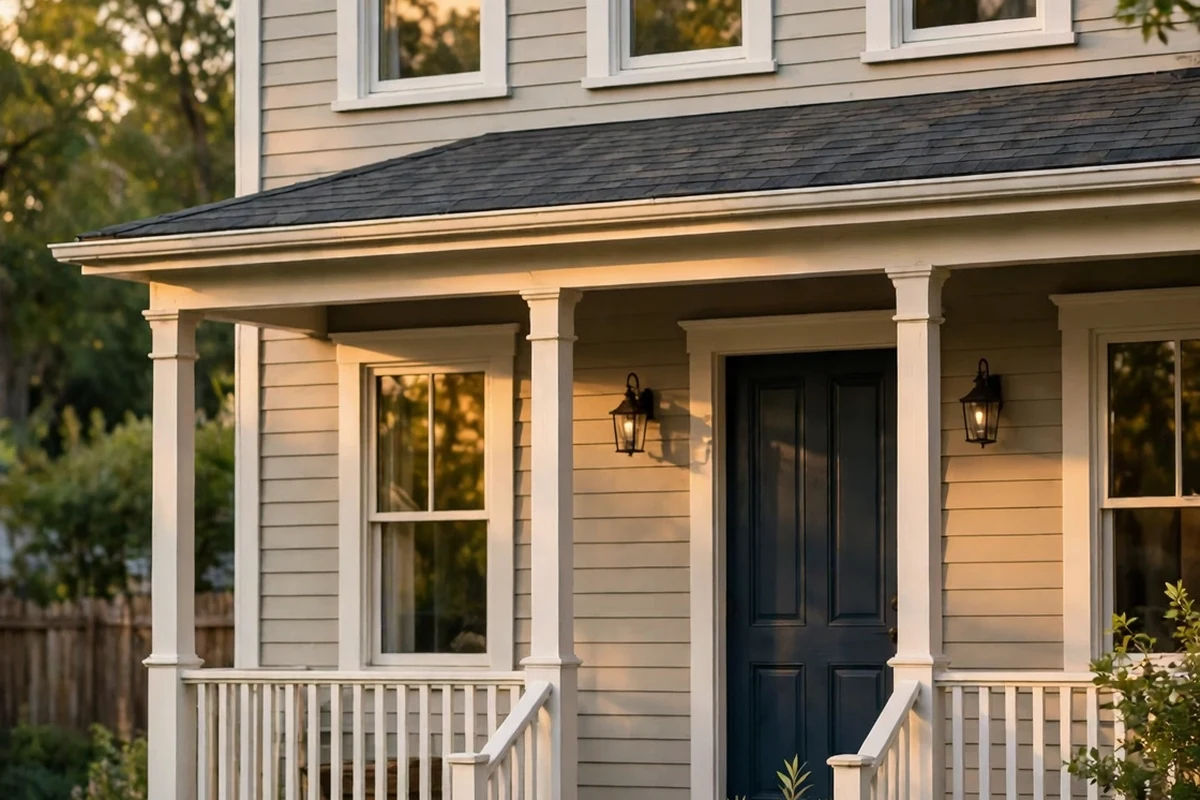
The two policies look similar from the outside. Both cover a house. Both have a dwelling limit and a liability limit. But they are built for different lives, and the differences matter most exactly when something goes wrong.
| Homeowners policy | Landlord policy | |
|---|---|---|
| Who lives there | You, the owner | A tenant |
| Dwelling coverage | Yes | Yes |
| Your personal belongings | Covered | Not covered — you do not live there |
| Landlord's property on site (appliances, tools) | Covered as your belongings | Covered as landlord's property |
| Tenant's belongings | Not applicable | Not covered — tenant needs renters insurance |
| Liability focus | You and your household | Tenants and guests on the property |
| Living expenses if the home is unlivable | Covered (additional living expenses) | Not covered — instead, loss of rental income |
| Covers rental activity | No | Yes |
| Cost for the same property | Base price | About 25% more |
Source: Insurance Information Institute 1.
The single most important row in that table is the second-to-last one. A standard homeowners policy may not cover losses while the home is rented out, because renting is a business use of the home, and a standard homeowners policy provides no cover for business activities in the home 1. That is not a small print detail. It means that if a tenant's cooking fire damages the kitchen and you are still on a homeowners policy, the insurer can deny the claim — not because the fire was not covered, but because the home was being used as a rental when it happened.
The living-expenses row shows the other big difference. A homeowners policy pays your hotel and meals if a covered loss forces you out of your own home. A landlord policy does not pay your living expenses, because you do not live there — instead it pays the rent you lose while the home cannot be rented 1. The two coverages do the same job in different lives: they keep the household's finances going while the home is repaired.
The cost row is the one new landlords ask about first. A landlord policy generally costs about 25% more than a standard homeowners policy for the same property 1. The same rule is repeated by Policygenius, ValuePenguin, and other guides, all citing the Insurance Information Institute. The reason is simple: a rented home is a higher risk. The owner is not there every day to spot a leak, a tenant may not care for the home the way an owner would, and the insurer cannot inspect the home as easily.
A worked example makes the rule concrete. If insuring the home as your own residence would cost $1,200 a year, a landlord policy for the same home would run about $1,500 a year. The exact number depends on the home, the location, the coverage limits, and the deductible, but the 25% rule gives you a realistic expectation before you get a quote. Treat any dollar figure you see online with care: published national averages for landlord insurance conflict sharply, from under $1,500 to over $2,600 a year, because different sites count different kinds of policies and different years. No single dollar average is reliable enough to print as the fact, which is why this guide leads with the 25% rule instead.
DP-1, DP-2, DP-3: the three policy forms
When you buy landlord insurance, the insurer will offer you one of three policy forms, named DP-1, DP-2, or DP-3. The letters stand for "dwelling property." The three forms run from narrowest to broadest, and the differences decide what is covered and how the claim is paid. Exact terms vary by carrier, so treat the descriptions below as the standard meaning of each form, and read your own policy for the details 4.
DP-1: the basic form. This is the narrowest and usually the cheapest. It covers a named list of perils — fire, lightning, wind, hail, and a handful of others — and it usually pays at actual cash value, which subtracts depreciation for age and wear 4. A DP-1 policy is the minimum cover for a rental, and it is the form most often used for a home that is hard to insure, such as a property in poor condition or one that has had claims. The low price comes with real limits: many common losses are simply not on the list, and what is covered is paid at depreciated value.
DP-2: the broad form. This covers a broader list of named perils than DP-1 — adding things like falling objects, the weight of ice and snow, and accidental water damage from plumbing — and it often pays at replacement cost instead of actual cash value 4. Replacement cost is a meaningful upgrade: it pays what it costs to repair or rebuild with new materials, without subtracting depreciation. A DP-2 policy costs more than DP-1, and for many landlords it is the sensible middle ground.
DP-3: the open-perils form. This is the broadest of the three and the usual default for a single-family rental. Instead of listing what is covered, it covers everything except what is specifically excluded — so a loss is covered unless the policy says it is not 4. It pays the structure at replacement cost. The price is the highest of the three forms, but so is the protection: with DP-1 and DP-2, a loss that is not on the named list is not covered, and the landlord only finds out after the claim. With DP-3, the question is reversed — the insurer must point to an exclusion to deny the claim.
Which form should you choose? For a typical single-family rental in good condition, DP-3 is the form most agents recommend, because the extra premium buys a much wider safety net. DP-2 is a reasonable choice if the budget is tight and the home is well maintained. DP-1 is best reserved for a property that cannot qualify for a broader form, or for a landlord who understands exactly what is left out and accepts the risk. Whatever form you choose, ask the agent to show you the list of named perils — or, for DP-3, the list of exclusions — and check the settlement basis in writing: actual cash value or replacement cost. Those two pages decide what a claim actually pays.
The Airbnb trap: short-term rentals are not covered

The most expensive mistake in landlord insurance today is the short-term rental. A standard landlord policy is written for long-term tenants on a lease, and it typically does not cover short-term rental activity on platforms such as Airbnb or VRBO 4. If you list the home for weekend guests while holding a standard landlord policy, you may have no cover at all for those stays.
The Insurance Information Institute draws the line between occasional and regular short-term renting 1. Occasional short rental of part of a primary home is a gray area: some insurers may allow it if you tell them, others require an endorsement. Regular short-term renting to various guests, on the other hand, is a business, and a standard homeowners policy provides no cover for business activities in the home 1. The same logic applies to a standard landlord policy: it is written for a tenant on a lease, not for a rotating cast of weekend guests.
If you rent on Airbnb or a similar platform, you need one of two things: a short-term-rental endorsement added to your landlord policy, or a dedicated short-term-rental policy written for that use 4. Either way, tell your insurer before the first guest arrives, not after the first claim. An insurer that learns about short-term renting from a claim is far more likely to deny it than one that was told in advance and priced the risk.
Do not rely on the platform's own cover as a substitute. Airbnb's host protection is a backstop for certain kinds of damage and liability, not a replacement for an insurance policy, and it does not cover everything a landlord policy covers. It also does not protect you between guests, or for damage that falls outside its terms. A host-protection program is a useful extra layer. It is not insurance, and it should never be the only layer.
The rule is simple: if guests change every few days, your policy must be written for that. Call your insurer, describe the rental pattern honestly, and get the right endorsement or policy in writing before you list the home.
Is landlord insurance required?
No broad federal or state law requires landlord insurance. You will not be fined for renting a home without it, the way you can be fined for driving a car without insurance. But for most landlords, that fact does not matter, because someone else requires it anyway.
If the rental has a mortgage, the lender almost always requires property insurance on the home for the life of the loan 1. That requirement does not go away when the home becomes a rental — and a homeowners policy does not satisfy it once the home is tenant-occupied, because the homeowners policy does not cover rental activity. So a landlord with a mortgage must carry a landlord policy, not because the law says so, but because the loan agreement does. If you let the policy lapse, the lender can buy force-placed insurance for you, at its own price, and add the cost to your loan.
Some homeowners associations and local rental-licensing rules also require proof of liability cover before a home can be rented 2. That is a local rule rather than a national one, so check the rules where the property sits — your city or county may ask for a certificate of insurance when you register the rental.
Even for a landlord who owns the home outright, with no mortgage and no local requirement, going without landlord insurance is a gamble with the whole value of the property. One fire can destroy a $250,000 house. One serious injury claim can cost more than that. The premium — about 25% more than a homeowners policy for the same home — is small next to the loss it protects against 1. The law does not require it. The arithmetic does.
Add-ons worth pricing, and how to keep the cost down
A basic landlord policy covers the building, liability, and lost rent. Most insurers offer add-ons — endorsements — that fill the gaps a particular property has. These are the ones worth asking about:
Umbrella or excess liability adds a layer of liability cover on top of the landlord policy, for landlords who want more protection against a large injury claim 4. Ordinance or law cover pays the extra cost of rebuilding to current building codes after a loss — a real cost in an older home 4. Equipment breakdown covers the HVAC system and major appliances when they fail mechanically 4. Water and sewer backup pays when a drain backs up into the home, a common and messy loss that a standard policy often excludes 4. Vandalism and extended theft cover fills gaps that some policy forms leave open, and vacancy cover protects a home that sits empty between tenants or during renovation 4. Rent guarantee is a separate product that covers a tenant who stops paying — different from loss of rent after a covered loss 4. And legal expenses or eviction costs cover helps with the cost of removing a tenant who will not leave 4.
You do not need every endorsement. You need the ones that match your property: water backup for a home with a basement, ordinance or law for an older home, vacancy cover for a home that sits empty. Ask your agent to price each one separately, and add only the ones whose risk you actually face.
A few habits keep the premium down without weakening the cover. Raise the deductible if you can afford to pay a larger share of a small claim yourself — a higher deductible is the most reliable way to lower a premium. Keep the property maintained, because a well-kept home has fewer claims and a better record. Bundle the landlord policy with your other insurance if the insurer offers a discount, and ask about discounts for security systems, smoke detectors, and updated wiring and plumbing. Review the policy every year at renewal: the rebuilding cost changes, the rent changes, and the cover should change with them.
Verified against the Insurance Information Institute guide to renting out a home, Policygenius, ValuePenguin, and a landlord insurance comparison guide on November 21, 2026.
The bottom line
The day a tenant moves in, your homeowners policy may stop covering your home, because a standard homeowners policy does not cover rental activity 1. Landlord insurance is the policy built for that life: dwelling cover for the structure, liability cover if a tenant or guest is hurt, and loss of rental income while the home cannot be rented after a covered loss. It generally costs about 25% more than a standard homeowners policy for the same property 1 — a premium worth paying, because a fire or a serious injury claim can cost many times more than the policy. Your tenant's belongings are not covered, so require renters insurance in the lease. Choose the policy form with your eyes open — DP-3 is the broadest and the usual default for a single-family rental — and if you rent short-term on Airbnb, get an endorsement or a dedicated policy before the first guest arrives, because a standard landlord policy does not cover short-term stays 4. No law requires landlord insurance, but a mortgage lender almost always does, and the arithmetic requires it even when the lender does not. If you take one action from this guide, make it this: call your insurer today, tell them the home is rented, and make sure the policy in force is a landlord policy, not a homeowners policy that stopped covering you the day the tenant moved in.
Frequently asked questions
- What does landlord insurance cover?
- Three things: damage to the structure itself (dwelling coverage), legal fees and medical expenses if a tenant or guest is hurt on the property (liability), and lost rent while the property cannot be rented during repair or rebuilding after a covered loss. It also covers personal property you leave on site for maintenance or tenant use, such as appliances and lawn equipment.
- How much does landlord insurance cost?
- There is no single reliable national average — published estimates conflict sharply, so this guide does not quote one. The reliable rule, from the Insurance Information Institute, is that a landlord policy generally costs about 25% more than a standard homeowners policy for the same property. The best way to know your price is to get a quote for your own property.
- Does my homeowners policy cover me if I rent out my house?
- No. A standard homeowners policy may not cover losses while the home is rented out. Once the home is tenant-occupied, you need a landlord policy. Your mortgage lender will also usually require property insurance on a financed rental, and a homeowners policy does not satisfy that requirement once the home is rented.
- What is the difference between DP-1, DP-2, and DP-3 landlord insurance?
- They are three forms of dwelling fire policy, from narrowest to broadest. DP-1 covers a named list of perils and usually pays actual cash value. DP-2 covers a broader list of named perils and often pays replacement cost. DP-3 is open perils on the structure at replacement cost, and it is the usual default for a single-family rental. Exact terms vary by carrier.
- Does landlord insurance cover Airbnb or short-term rentals?
- No. A standard landlord policy is written for long-term tenants on a lease and typically does not cover short-term rental activity. If you rent on Airbnb or VRBO, you need a short-term-rental endorsement or a dedicated short-term-rental policy. Occasional short rental of part of a primary home is a gray area — some insurers allow it if you tell them, others require an endorsement.
- Is landlord insurance required by law?
- No broad federal or state law requires it. But if the rental has a mortgage, the lender almost always requires property insurance for the life of the loan, and some homeowners associations and local rental-licensing rules also require proof of liability cover. In practice, almost every landlord with a financed property must carry it.
Sources
Numbers in the text point to these publications. Links open the original source.
- Insurance Information Institute (Triple-I). Coverage for renting out your home
- Policygenius. What Does Landlord Insurance Cover?
- ValuePenguin. What Does Landlord Insurance Cover?
- Compare.com. Landlord Insurance: Coverage, Costs, and How to Buy
Related guides
- Renters Insurance: What It Covers, What It Costs, and How to Choose It
Renters insurance covers your belongings, your liability, and living elsewhere after a covered loss. The average HO-4 policy cost $173 a year in 2023.
- What Does Homeowners Insurance Cover? (And What It Does Not Cover)
A standard homeowners policy covers your dwelling, other structures, belongings, living expenses, and liability — but not floods or earthquakes.
- Homeowners Insurance Discounts: What Actually Saves You Money
Only a few homeowners discounts are verified by the III: bundling 5–15%, security 5–20%, loyalty up to 10%. Here is the honest list.
This guide is general educational information, not insurance, legal or financial advice. Insurance rules and prices vary by state, company and personal circumstances. Confirm anything important with your state insurance department or a licensed professional. Read the full disclaimer.