Home Insurance, coverage types
What Does Homeowners Insurance Cover? (And What It Does Not Cover)
Six coverages, labeled A through F, decide what your policy pays for. The dwelling is covered against almost anything, your belongings only against 16 listed perils, and floods and earthquakes are not covered at all.
- By
- Ella H.
- Published
- Updated
- Reading time
- 13 min read
Key takeaways
- A standard HO-3 policy has six coverages, A through F, covering the dwelling, other structures, personal property, loss of use, liability, and medical payments.
- The dwelling is covered on an open-perils basis, but personal property is covered only against the 16 named perils.
- Typical default limits are 10% of Coverage A for other structures, 50% to 70% for personal property, and around 20% for loss of use.
- Standard sub-limits cap theft of jewelry at $1,500 and theft of firearms or silverware at $2,500.
- Flood, earthquake, and wear and tear are excluded and need separate coverage or an endorsement.
In this guide
- The six coverages, A through F
- Open perils vs named perils
- The 16 named perils
- What is not covered: the main exclusions
- Sub-limits: the caps inside Coverage C
- How claims break down in practice
- Replacement cost vs actual cash value
- Common endorsements that fill the gaps
- Policy forms: HO-3, HO-4, HO-6, and HO-7
- What changed in 2026
- Frequently asked questions
- The bottom line
- Frequently asked questions
- Sources

A standard homeowners insurance policy covers damage to your home and belongings from a fire, a windstorm, a burst pipe, a burglary, and a dozen other listed causes, plus the cost of living somewhere else while the home is repaired and your legal liability if someone is hurt on your property. It does not cover floods, earthquakes, or damage that builds up slowly from wear and tear or poor maintenance.
The short answer is not enough on its own, because the policy does not cover everything in the same way. The dwelling is covered against almost anything that is not specifically excluded, while your belongings are covered only against a list of 16 named perils. Knowing which part of the policy applies to which loss is what turns a confusing contract into a useful one.
The six coverages, A through F
Every standard homeowners policy is organized into six coverages, and each one has its own limit. The limit is the most the insurer will pay for that part of a loss, and the limits do not add together across coverages.
Coverage A, dwelling, pays to repair or rebuild the house itself, including attached structures such as a garage and permanently installed fixtures such as built-in cabinets and plumbing. This is the anchor of the policy, and the other property limits are usually set as percentages of it.
Coverage B, other structures, pays for detached structures on the same property: a detached garage, a shed, a fence, a gazebo, or a driveway. The typical default is 10% of the Coverage A limit, so a $300,000 dwelling limit usually brings $30,000 for other structures 1. A large detached workshop or a pool house can need more than the default.
Coverage C, personal property, pays for the movable things you own: furniture, clothing, electronics, kitchenware, and appliances that are not built in. Most policies set this limit at 50% to 70% of the dwelling limit, so a $300,000 dwelling limit usually brings $150,000 to $210,000 for belongings 1. Coverage C also applies to belongings you own that are damaged or stolen away from home, though usually at a reduced limit.
Coverage D, loss of use, pays the extra cost of living elsewhere while your home is uninhabitable after a covered loss: a hotel or rental, extra food costs, and similar expenses. It is often set at around 20% of the dwelling limit, though the exact figure varies by insurer and state.
Coverage E, personal liability, pays legal defense costs and damages if you are found responsible for injuring someone or damaging their property, whether it happens at home or elsewhere. The standard limit is often $100,000, and many insurers and advisors recommend $300,000 to $500,000, which is usually inexpensive to add.
Coverage F, medical payments to others, pays small medical bills for guests injured on your property, regardless of fault, without a lawsuit. Typical limits run from $1,000 to $5,000 per person.
| Coverage | What it covers | Typical default limit |
|---|---|---|
| A. Dwelling | The house and attached structures | The cost to rebuild, set by you |
| B. Other structures | Detached garage, shed, fence | 10% of Coverage A |
| C. Personal property | Furniture, clothing, electronics | 50% to 70% of Coverage A |
| D. Loss of use | Hotel, rental, extra food during repairs | Around 20% of Coverage A |
| E. Personal liability | Legal defense and damages to others | Often $100,000 standard |
| F. Medical payments | Guest medical bills, no fault needed | Often $1,000 to $5,000 per person |
Open perils vs named perils
The most important distinction in the policy is between open perils and named perils. Under an HO-3, the standard form for owner-occupied homes, the dwelling is covered on an open-perils basis: anything that damages the house is covered unless the policy specifically excludes it. Your belongings, by contrast, are covered on a named-perils basis: they are covered only if the damage comes from one of the 16 perils listed in the policy 1.
That difference is easy to miss and expensive to learn after a loss. If a strange accident damages the house itself, the open-perils wording is on your side. If the same accident damages only your belongings, and the cause is not one of the 16 named perils, there is no coverage. An HO-5 policy removes the gap by covering personal property on an open-perils basis too, and it is worth asking your insurer what the upgrade costs.
The 16 named perils
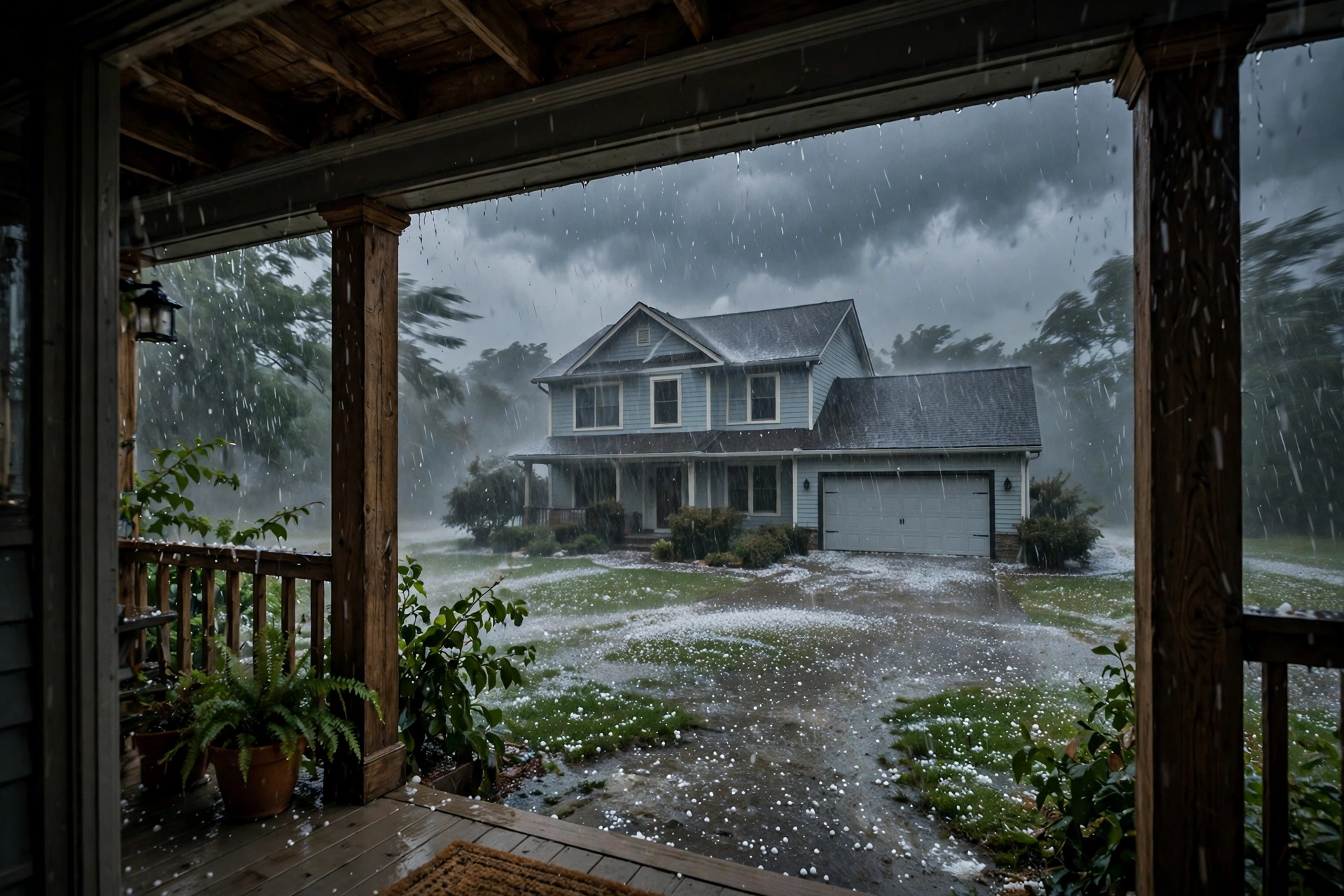
The 16 named perils are the causes of loss that a standard HO-3 policy covers for personal property, and they are also the perils an HO-2 broad form covers for both the dwelling and belongings. The Insurance Information Institute lists them as follows 1:
- Fire or lightning
- Windstorm or hail
- Explosion
- Riot or civil commotion
- Damage caused by aircraft
- Damage caused by vehicles
- Smoke
- Vandalism or malicious mischief
- Theft
- Volcanic eruption
- Falling objects
- Weight of ice, snow, or sleet
- Accidental discharge or overflow of water or steam from plumbing, heating, air conditioning, a fire-protective sprinkler system, or a household appliance
- Sudden and accidental tearing apart, cracking, burning, or bulging of a heating, air conditioning, or sprinkler system
- Freezing of plumbing, heating, air conditioning, or sprinkler systems
- Sudden and accidental damage from artificially generated electrical current
Note what the list leaves out. It does not include flood, earthquake, or earth movement. It does not include damage from insects, birds, or rodents. It does not include wear and tear, rust, or gradual deterioration. And the water peril, number 13, covers sudden discharge, not a slow leak that went unnoticed for months.
Important
Flood damage is excluded from every standard homeowners policy, in every state. If water comes from outside the home, from a river, a storm surge, or heavy rain pooling on the ground, only a separate flood policy pays. See our guide to flood damage and homeowners insurance.
What is not covered: the main exclusions
A standard policy excludes a short list of perils outright, and the exclusions are similar across insurers because they follow the ISO form. The big three are flood, earthquake, and earth movement (including landslides and sinkholes in most forms). War, nuclear hazard, and intentional damage caused by the policyholder are also excluded, as is damage from government action, such as the seizure or destruction of property.
Beyond named exclusions, the policy does not pay for maintenance problems. A roof that leaks because it is 30 years old, a foundation that cracks over decades, or mold that grows from a leak nobody fixed are not covered losses. The policy covers sudden and accidental events, not the slow cost of owning a home. The same logic applies to mechanical breakdown: a furnace that simply stops working is not a covered loss, though a furnace damaged by fire would be.
There are also categories of property the policy does not cover at all, or covers only in limited ways. Motor vehicles are excluded from personal property coverage, so the car in the driveway needs auto insurance. Business property kept at home has a low sub-limit, and a home-based business generally needs a separate business policy or endorsement. Animals, other than pets kept for personal use, and property of tenants or roomers are typically excluded too.
Sub-limits: the caps inside Coverage C

Even when a loss is covered, the policy caps what it pays for certain categories of belongings. These sub-limits sit inside the overall Coverage C limit and do not add to it, so they are easy to overlook until a claim is paid. The standard ISO HO-3 form sets the following theft sub-limits, and most insurers track them closely 1:
| Category | Standard sub-limit (theft) |
|---|---|
| Jewelry, watches, and furs | $1,500 |
| Firearms and related equipment | $2,500 |
| Silverware and goldware | $2,500 |
| Cash, bank notes, and coins | $200 |
| Securities and valuable papers | $1,500 |
| Business property on the premises | $2,500 |
The theft-only detail matters. If a fire destroys a $10,000 jewelry collection, the claim is paid up to the full Coverage C limit. If a burglar steals the same collection, the payment is capped at $1,500 unless you have added a scheduled personal property endorsement. That endorsement, sometimes called a floater or rider, lists a specific item at its appraised value and covers it for a broader set of risks, including accidental loss. Anyone with an engagement ring, a watch collection, or valuable art should ask about scheduling it.
Personal property away from home is also capped. Items stolen from a hotel room, a car, or a college dorm are usually covered at 10% of the Coverage C limit or $1,000, whichever is greater. The sub-limits above still apply on top of that cap.
How claims break down in practice
The Insurance Information Institute reports that, in 2022, wind and hail accounted for almost 41% of homeowners claims, water damage and freezing for 28%, and fire and lightning for 22% 2. That mix explains why the roof and the plumbing matter so much: the most common claims are weather and water, not burglary or fire. It also explains why insurers pay close attention to roof age and condition, and why a home with an old roof can be harder or more expensive to insure.
Fire claims are less frequent but far more expensive per claim than wind or water claims, which is why the dwelling limit matters most. A single fire can be a total loss, while most wind and water claims are partial losses measured in thousands of dollars.
Replacement cost vs actual cash value
When a covered loss is paid, the amount depends on how the property is valued. Replacement cost pays what it costs to repair or rebuild with materials of like kind and quality, without subtracting depreciation. Actual cash value pays replacement cost minus depreciation, so older items are worth less.
Under a standard HO-3, the dwelling is settled at replacement cost if the Coverage A limit is at least 80% of the full cost to rebuild at the time of the loss. If the limit falls below that threshold, the settlement is reduced, a rule known as the 80% rule. Personal property is often settled at actual cash value by default, and you can add replacement cost coverage for belongings for an extra premium. The difference is real: a five-year-old sofa is worth much less at actual cash value than the cost of buying a new one.
Roofs deserve a special note. Many insurers now settle older roofs at actual cash value, or apply a separate wind and hail deductible, often a percentage of the dwelling limit rather than a flat dollar amount. A 2% wind deductible on a $300,000 dwelling limit is $6,000 out of pocket before the insurer pays anything for wind damage. Check whether your policy has a separate wind or hail deductible, and what it is.
Common endorsements that fill the gaps
Endorsements, also called riders, add coverage the standard form leaves out. The most useful ones for most homeowners are:
- Water backup and sump pump overflow. Covers water that backs up through sewers or drains or overflows from a sump pump. Standard policies exclude this, and the NFIP flood policy excludes it too unless a flood caused it.
- Ordinance or law. Pays the extra cost of rebuilding to current building codes, such as upgraded wiring or a higher foundation. The standard form excludes code upgrade costs.
- Scheduled personal property. Covers jewelry, art, firearms, and collectibles at appraised value, above the standard sub-limits.
- Earthquake. Available in most states as an endorsement, with its own deductible, usually a percentage of the dwelling limit.
- Flood. Flood coverage is a separate policy, not an endorsement on most homeowners forms, and it is usually bought through the NFIP or a private flood insurer.
- Replacement cost for personal property. Upgrades belongings from actual cash value to replacement cost settlement.
- Extended replacement cost. Pays an extra percentage above the dwelling limit, typically 25% or 50%, if rebuilding costs more than the limit.
- Home business. Adds coverage for business property and liability for a business run from the home.
Tip
A home inventory makes every claim faster and larger. Photograph each room, keep receipts for big purchases, and store the list somewhere outside the home, such as a cloud drive. After a fire, nobody remembers everything they owned.
Policy forms: HO-3, HO-4, HO-6, and HO-7
The form on your declarations page decides the shape of your coverage. The HO-3 is the standard form for owner-occupied single-family homes, with open-perils dwelling coverage and named-perils belongings. The HO-5 is the broader version, with open perils for belongings as well. The HO-4 is a renters policy: it covers the tenant's belongings and liability, but not the building, which belongs to the landlord. The HO-6 is a condo policy: it covers the interior of the unit, the owner's belongings, and liability, while the condo association's master policy covers the building exterior and common areas. The HO-7 is the equivalent of the HO-3 for mobile and manufactured homes.
If you are a renter or a condo owner, the coverages above still apply to you in part, but Coverage A works differently or not at all, and the limits you choose should reflect what you actually own and owe. The HO-3 is the form behind most of the figures in this guide, and it covered 79.5% of owner-occupied exposures in the NAIC's 2023 data, published in July 2026 3.
What changed in 2026
Nothing in the standard ISO form changed in 2026, but the context around it did. The NAIC's report on 2023 data, published in July 2026, is the latest official picture of what policies cost and which forms people carry 3. At the same time, NOAA's billion-dollar disaster series ended after 2024, with 27 billion-dollar disasters in that final year, which keeps pressure on insurers to narrow water and roof coverage and to raise wind and hail deductibles in the hardest-hit states. If your renewal in 2026 came with a new roof schedule or a percentage wind deductible, that is the reason, and it is worth comparing the new terms with your old ones rather than only comparing the premium.
Frequently asked questions
Does homeowners insurance cover a broken appliance? No, not if it broke from age or wear. A home warranty or a repair is the route for a broken appliance. Insurance covers it only if a covered peril, such as a fire or a power surge, damaged it.
Does homeowners insurance cover a tree falling on the house? Yes, if the tree fell because of a covered peril such as wind or lightning, and the policy pays to remove the tree and repair the damage. If a dead tree you knew about falls in calm weather, the insurer may argue it was a maintenance failure.
Does homeowners insurance cover a dog bite? Usually yes, under Coverage E personal liability, including bites that happen away from home. Some insurers exclude certain breeds or charge more, and a history of bites can affect renewal.
Does homeowners insurance cover a home office? Only in a limited way. Business property on the premises is typically capped at $2,500, and business liability is generally excluded. A home business endorsement or a separate business policy is needed for real coverage.
Verified against the Insurance Information Institute (III) homeowners coverage guide on November 15, 2026.
The bottom line
A standard homeowners policy covers the house against almost anything not excluded, belongings against 16 named perils, living expenses during repairs, and liability and guest medical bills. The gaps are specific and predictable: floods, earthquakes, wear and tear, and high-value items above their sub-limits. Read the exclusions and the sub-limits before you need them, schedule anything valuable, and add water backup and ordinance or law coverage if your home and budget allow. The cheapest policy is rarely the one with the best coverage, and the difference usually shows up in the sub-limits and the deductibles, not in the headline premium.
Frequently asked questions
- What does homeowners insurance cover?
- It covers the dwelling, other structures such as a detached garage, personal property, additional living expenses while the home is repaired, personal liability, and medical payments to guests. The dwelling is covered on an open-perils basis and belongings on a named-perils basis.
- Does homeowners insurance cover water damage?
- It covers sudden and accidental water damage, such as a burst pipe or a washing machine hose that fails. It does not cover flooding from outside the home, gradual leaks, or sewer backup unless you add an endorsement.
- Does homeowners insurance cover roof damage?
- It covers roof damage from a covered peril, such as wind, hail, or a falling tree. It does not cover a roof that fails because it is old and worn out, and older roofs may be settled at actual cash value rather than replacement cost.
- What are the 16 named perils in homeowners insurance?
- Fire or lightning, windstorm or hail, explosion, riot or civil commotion, aircraft, vehicles, smoke, vandalism or malicious mischief, theft, volcanic eruption, falling objects, weight of ice snow or sleet, accidental discharge of water or steam, sudden tearing apart of heating or AC systems, freezing of plumbing or heating systems, and sudden damage from artificially generated electrical current.
- Does homeowners insurance cover mold?
- It covers mold only when it results from a covered peril, such as water from a burst pipe that is repaired promptly. It does not cover mold from long-term leaks, humidity, or poor maintenance.
- Does homeowners insurance cover jewelry?
- Only up to a sub-limit, typically $1,500 for theft under a standard HO-3 form. Higher-value items need a scheduled personal property endorsement that lists the item at its appraised value.
Sources
Numbers in the text point to these publications. Links open the original source.
- Insurance Information Institute (Triple-I). What is covered by standard homeowners insurance?
- Insurance Information Institute (Triple-I). Facts + Statistics: Homeowners and renters insurance
- National Association of Insurance Commissioners (NAIC). Dwelling Fire, Homeowners Owner-Occupied, and Homeowners Tenant and Condominium/Cooperative Unit Owner's Insurance Report
Related guides
- What Is Homeowners Insurance and How Does It Work?
Homeowners insurance is a contract that pays to repair or rebuild your home after a covered loss and protects you if someone is hurt on your property.
- How Much Homeowners Insurance Do I Need? Dwelling, Liability and the 80% Rule
Start with the full cost to rebuild your home, not its market value, and keep dwelling coverage at or above 80% of that cost.
- Does Homeowners Insurance Cover Flood Damage? NFIP, Costs and the 30-Day Wait
No, a standard homeowners policy excludes flood damage. Flood coverage comes from a separate NFIP or private policy, with a 30-day waiting period.
This guide is general educational information, not insurance, legal or financial advice. Insurance rules and prices vary by state, company and personal circumstances. Confirm anything important with your state insurance department or a licensed professional. Read the full disclaimer.