Home Insurance, savings
Homeowners Insurance Discounts: What Actually Saves You Money
Discount listicles promise 40% off and stack percentages that were never verified. The real, checkable list is shorter — and it is the one that saves you money without misleading you.
- By
- Ella H.
- Published
- Updated
- Reading time
- 14 min read
Key takeaways
- The only bundling figure verified by the Insurance Information Institute is 5–15% off the premium when you buy home and auto from the same insurer.
- Basic safety devices such as a smoke detector, burglar alarm, or dead-bolt locks earn a discount of at least 5%; a sophisticated sprinkler system plus a monitored alarm can earn up to 15–20%.
- Staying with the same insurer earns 5% after 3–5 years and 10% after 6 or more years.
- Retired homeowners age 55 and older can earn up to 10% at some companies.
- No verified percentage exists for claims-free, new-roof, or wind-mitigation discounts on the III or NAIC pages — any number you see for those is unverified.
In this guide
- Bundle home and auto: 5–15%
- Security and safety devices: at least 5%, up to 15–20%
- Loyalty and retired discounts: 5%, 10%, and up to 10%
- Your home itself can cut the price: 5–15%
- Disaster-resistant upgrades: real, but no verified percentage
- The deductible lever: up to 25%
- What does not earn a discount
- How to ask for every discount you qualify for
- The bottom line
- Frequently asked questions
- Sources

Every discount listicle about homeowners insurance promises the same thing: huge savings, stacked percentages, and a premium cut in half. Most of those numbers were never verified against a primary source. This article does the opposite. It lists only the discounts whose percentages appear on pages published by the Insurance Information Institute (III) or the National Association of Insurance Commissioners (NAIC), and it says plainly where no verified percentage exists. The list is shorter than the ones you will find elsewhere. It is also the only list in this article that you can trust, because every number in it can be checked.
The starting point for the dollar math is the average homeowners premium of $1,737 a year in 2023, from NAIC data reported by the III 3. All dollar figures in this article that are calculated from that average are labeled as calculated, not sourced. Five percent of $1,737 is about $87 a year. Ten percent is about $174. Fifteen percent is about $261. Twenty percent is about $347. Keep those numbers in mind as you read, because they turn abstract percentages into real money, and they show how modest most discounts actually are. A discount that sounds large in a headline is often under $100 a year in practice.
Discounts matter, but they are not the main lever on your premium. Your home's location, its age and construction, your coverage limits, your deductible, and your claims history move the price far more than any single discount. Treat discounts as a way to trim a fair premium, not as a way to fix an overpriced one. That distinction is the first thing to understand, because it protects you from the most common trap in this market: buying an expensive policy because the discount looked big.
Bundle home and auto: 5–15%
Bundling means buying your homeowners policy and your auto policy from the same insurer. It is the most widely advertised homeowners discount, and it is also the most exaggerated. The only bundling figure verified on a primary source is the III's: 5–15% off the premium 1. On the average 2023 premium of $1,737, that is roughly $87 to $261 a year, calculated from that average.
You will see much bigger numbers elsewhere. Some sites claim bundling can save "up to 40%." Others quote average bundling savings of 16% or single-company figures in the high twenties. Those numbers come from commercial rate studies and quote data, not from the III or the NAIC, and they are not verified on any primary source page read for this article. Do not plan your budget around them. The 5–15% range is the number an insurer's own industry body stands behind, and it is the number to use when you compare a bundle against two separate policies.
The NAIC confirms that a multi-policy discount exists, calling it a "small discount" for buying more than one policy from the same company, without giving a percentage 2. That wording is honest and useful. A bundle discount is real, and it is usually worth taking, but it is small, and it is not a reason to stop shopping.
Here is the trap the III warns about explicitly: a bundle discount applied to an overpriced base rate can still cost more than two separate cheap policies. If one insurer charges you $2,400 for homeowners and $1,800 for auto, a 10% bundle discount brings the total to $3,780. If another insurer charges $2,000 for homeowners and a third charges $1,500 for auto, the two separate policies cost $3,500 with no discount at all. The discount percentage is meaningless without the base price. Always compare the total you would actually pay, bundle against separate policies, with the same limits and deductibles on both sides.
To compare honestly, get a bundled quote and two standalone quotes for the same coverage, then compare the totals. If the bundle wins, take it. If it does not, walk away from the bundle. The discount is a tool, not a loyalty test.
Security and safety devices: at least 5%, up to 15–20%
Security discounts are the most oversold category in homeowners insurance, and the III's figures draw a clear line between a basic device and a serious system. A smoke detector, a burglar alarm, or dead-bolt locks earn a discount of at least 5% 1. A sophisticated sprinkler system combined with a monitored fire and burglar alarm can earn up to 15–20% 1. That top range is the largest verified discount in this article, and it is also the hardest to reach, because it requires both the sprinkler system and the monitored alarm together.
The distinction matters because most discount pages blur it. A security vendor may advertise "5–20%" as if a basic alarm reaches the top of the range. It does not. The 15–20% figure requires a sophisticated sprinkler system plus a monitored fire and burglar alarm, not a door sensor and a smoke detector. If all you have is a basic alarm, expect the bottom of the range, around 5%, which is roughly $87 a year on the average premium, calculated from the $1,737 average.
The NAIC lists the same kinds of devices as discount factors, without percentages: dead-bolt locks, smoke alarms, fire extinguishers, sprinkler systems, and security systems 2. That confirms the category is real across the industry, even where the exact discount varies by insurer and state. Ask your insurer which devices it credits, what proof it needs, and whether the discount applies to the whole premium or only part of it.
There is also a cost question that discount pages rarely raise. A monitored alarm system is a service with a monthly fee, and the discount it earns is a percentage of a premium that is already modest. A 5% credit on the average premium is about $87 a year, calculated from the $1,737 average. Before you buy a monitored system for the discount alone, ask what the monitoring costs per year and compare it with the credit. In many cases the discount does not pay for the service by itself. Buy security for safety first, and treat the discount as a bonus, not as the reason for the purchase. If you already have a monitored system, by all means claim the discount. If you do not, do not buy one to chase it.
Loyalty and retired discounts: 5%, 10%, and up to 10%
Two discounts are verified by the III and rarely headlined by competitors, which is a shame, because they are among the easiest to earn. The first is loyalty. Staying with the same insurer for 3 to 5 years earns a 5% discount, and staying for 6 or more years earns 10% 1. Ten percent is about $174 a year on the average 2023 premium, calculated from the $1,737 average. That is real money for doing nothing except not switching.
The second is the retired discount. Homeowners age 55 and older who are retired can earn up to 10% off the premium at some companies 1. Not every insurer offers it, and the exact age and retirement rules vary, so you need to ask. If you are 55 or older and retired, or approaching retirement, put this question on the list for your next renewal call. It is the kind of discount that is easy to miss because it is never advertised as loudly as bundling.
Loyalty deserves a caution, though. A 10% loyalty discount on an overpriced policy is worth less than no discount on a fairly priced one. Insurers know that long-term customers switch less often, and some raise base rates gradually over the years, knowing the loyalty discount softens the blow. The loyalty discount is worth taking, but it is not a reason to stop comparing prices. Every two or three years, get a competing quote for the same coverage and compare the total. If a competitor beats your loyal price even after your 10% discount, the loyalty is costing you money, and it is time to switch or to ask your insurer to match the better price.
Your home itself can cut the price: 5–15%
Not every discount comes from something you buy or a company you stay with. Some of it comes from the home itself. The III reports that the choice of home can cut premiums by 5–15%: a home near a fire hydrant and a professional fire department, with systems less than 10 years old, and built of brick in the eastern United States, can earn that range 1. Five to 15% is roughly $87 to $261 a year on the average premium, calculated from the $1,737 average.
This is the discount you can influence most when you buy a home, and least once you already own one. If you are house hunting, the distance to the nearest hydrant, the quality of the local fire department, and the age of the roof, plumbing, and electrical systems are all worth checking, because they shape the premium for as long as you own the home. If you already own, updating an old roof, rewiring an old electrical panel, or replacing old plumbing can help, but those are expensive projects, and the insurance saving alone will not pay for them. Do them for safety and for the home's value, and take the discount as a side benefit.
The NAIC adds a related point: insuring your home for at least 80% of its replacement value is a requirement for full replacement-cost settlement, not a discount, but it shapes what you pay and what you recover 2. A home insured below that threshold can be settled at actual cash value after a loss, which is a far bigger financial hit than any discount is worth. Keep the dwelling limit right first, then worry about discounts.
Disaster-resistant upgrades: real, but no verified percentage
Some upgrades reduce risk so clearly that insurers reward them, and the NAIC confirms the category. Storm shutters and hurricane-resistant glass are examples: insurers in some states are required to offer discounts for them 2. A reinforced roof, stronger roofing materials, and other disaster-resistant construction are also listed by the III as ways to save on premiums, though without a percentage attached 1. The NAIC also lists roof replacement as a discount factor, again without a percentage 2.
That "without a percentage" is the honest part, and it is why this section has no number in its heading. You will see percentages for these upgrades all over the internet, including large figures for wind mitigation in Florida and for new roofs. None of those percentages appears on the III or NAIC pages read for this article, so none of them appears here. The state mandate for shutter and glass discounts is real, and the discount itself is real. The size of it depends on your state, your insurer, and your home, and the only way to know it is to ask your insurer for the exact figure on your policy.
If you live in a hurricane or severe-storm area, the practical advice is simple. Ask your insurer which mitigation features it credits, what documentation it needs, and whether a wind-mitigation inspection is required. Keep the paperwork for any upgrade: the roof permit, the shutter installation invoice, the impact-glass certificate. Insurers credit what they can verify, and paperwork is how you verify it. And remember that the value of a reinforced roof or impact glass is not only the discount. It is also a home that survives a storm with less damage, which is worth far more than any premium saving.
The deductible lever: up to 25%
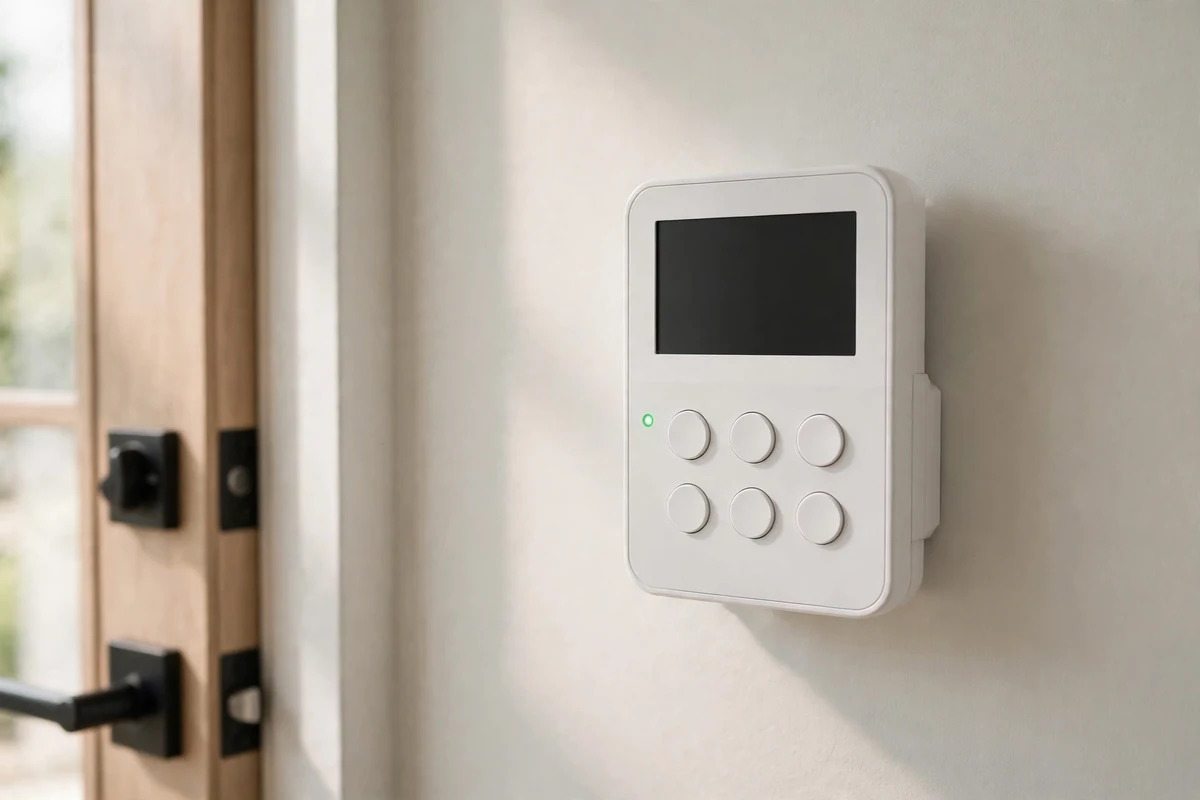
Raising your deductible is the single biggest saving most homeowners can make, and it is already covered in detail in our guide to the homeowners insurance deductible. The III's figure is that raising the deductible from $500 to $1,000 may save up to 25% off the premium 1. On the average 2023 premium of $1,737, 25% is about $434 a year, calculated from that average. That is more than the bundling discount and more than the loyalty discount, and it is available to almost everyone.
The trade is straightforward. A higher deductible means you pay more out of pocket on the day something goes wrong. If a windstorm causes $8,000 of roof damage and your deductible is $1,000, the insurer pays $7,000. If your deductible is $500, the insurer pays $7,500. The $500 difference is the price of the lower premium, paid only when you file a claim. The saving, by contrast, arrives every year, claim or no claim.
Choose a deductible you could actually pay on short notice. If $1,000 would strain your savings, keep the deductible at $500 and pay the higher premium. If you have an emergency fund that covers $1,000 comfortably, the higher deductible is usually the better deal, because most homeowners go years between claims and the annual saving adds up. Some insurers offer deductibles above $1,000, and the saving grows with the deductible, but so does the out-of-pocket bill. The right number is the one you can pay without borrowing.
What does not earn a discount
A discount article should also say what does not help, because the internet is full of claims that sound plausible and are not verified. No verified percentage exists on the III or NAIC pages for a claims-free discount, for a new-roof discount, or for a wind-mitigation discount. That does not mean these factors never affect your price. A claims-free history, a new roof, and storm-resistant features can all influence what an insurer charges. It means no primary source page read for this article gives a number for them, so any number you see quoted for them is unverified. Do not budget around it, and do not choose a contractor or a roof because a website promised a percentage.
The same honesty applies to stacked discounts. No verified figure supports the idea that discounts stack to 30–40% or more off the premium. Discounts apply to the same base premium, each insurer has its own rules about which discounts combine, and some discounts do not combine at all. Adding advertised percentages together is not how insurance pricing works. Ask your insurer which of your discounts combine and what the total saving actually is, rather than doing the addition yourself.
Two more points belong here. First, a new wood-burning fireplace or a wooden deck can raise your premium rather than lower it, because they add fire risk, according to the NAIC 2. A home improvement is not automatically a discount. Second, a discount never changes how a claim is paid. Whether your dwelling is settled at replacement cost or actual cash value is a separate question from whether you earned a discount, and it is the more important one. A 10% discount on a policy that settles at actual cash value can cost you far more after a loss than a full-price policy that settles at replacement cost.
How to ask for every discount you qualify for
Discounts are not automatic. Insurers do not always apply them without being asked, and some require proof. The most effective step is also the simplest: once a year, at renewal, call your insurer or agent and ask for the full list of discounts you qualify for. Bring the proof with you. An alarm monitoring contract, a roof replacement permit, a bundling arrangement, and a retirement date are all things an insurer can verify, and verified things get credited.
Go through the list in this article, one item at a time. Do you bundle home and auto? Do you have a smoke detector, a burglar alarm, and dead-bolt locks? Do you have a monitored alarm and a sprinkler system? How long have you been with this insurer? Are you 55 or older and retired? Is your home near a hydrant with a professional fire department? Do you have storm shutters or impact-resistant glass? What is your deductible, and could you raise it? Each yes is a discount to claim, and each no is a question about whether the change is worth making.
Get the answer in writing, or at least on the declarations page at renewal. A discount that is promised on the phone and never appears on the declarations page is a discount you do not have. Check the declarations page every year, compare the total premium with competing quotes for the same coverage, and remember the rule that governs this whole article: the discount percentage means nothing without the base price. The cheapest policy is the one with the lowest total premium for the same coverage, not the one with the biggest advertised discount.
Verified against the Insurance Information Institute and the NAIC on November 19, 2026.
The bottom line
The honest list of homeowners insurance discounts is short: bundling saves 5–15%, basic safety devices earn at least 5%, a sophisticated sprinkler system with a monitored alarm can reach 15–20%, loyalty earns 5% after 3–5 years and 10% after 6 or more, retired homeowners 55 and older can earn up to 10%, and the choice of home can cut 5–15%. Raising the deductible from $500 to $1,000 may save up to 25%. Everything else you see advertised, from claims-free percentages to stacked-discount totals, is unverified on the primary sources. Use the verified list, compare total premiums rather than discount percentages, and ask your insurer once a year for every discount you qualify for, with proof in hand. The savings are modest, usually a few hundred dollars a year at most, but they are real, and they are yours to claim.
Frequently asked questions
- What is the biggest homeowners insurance discount?
- Of the discounts verified by the Insurance Information Institute, the largest is the security discount: up to 15–20% for a sophisticated sprinkler system plus a monitored fire and burglar alarm. Bundling home and auto saves 5–15%. Claims of 40% off bundling are marketing ceilings, not verified figures.
- How much can I save by bundling home and auto insurance?
- The Insurance Information Institute puts the bundling discount at 5–15% off the premium. On the average 2023 homeowners premium of $1,737 a year, that is roughly $87 to $261 a year, calculated from that average. The exact discount depends on the insurer and the state.
- Does a security system lower homeowners insurance?
- Yes. A smoke detector, burglar alarm, or dead-bolt locks earn a discount of at least 5%, according to the Insurance Information Institute. A sophisticated sprinkler system combined with a monitored fire and burglar alarm can earn up to 15–20%. A basic alarm alone does not reach the top of that range.
- Is there a discount for staying with the same insurer?
- Yes. The Insurance Information Institute reports a 5% discount for staying with the same insurer for 3–5 years, and 10% for 6 or more years. On the average 2023 premium of $1,737, 10% is roughly $174 a year, calculated from that average.
- Do retired homeowners get a discount?
- At some companies, yes. Homeowners age 55 and older who are retired can earn up to 10% off the premium, according to the Insurance Information Institute. It is not offered by every insurer, so ask yours.
- Can discounts be stacked to cut my premium in half?
- No verified figure supports stacking discounts to 30–40% or more. Discounts apply to the same base premium, each insurer has its own rules, and some discounts do not combine. Ask your insurer which of your discounts combine and what the total saving actually is, rather than adding advertised percentages together.
Sources
Numbers in the text point to these publications. Links open the original source.
- Insurance Information Institute (Triple-I). 12 Ways to Lower Your Homeowners Insurance Costs
- National Association of Insurance Commissioners (NAIC). Homeowners insurance (consumer guide)
- Insurance Information Institute (Triple-I). Facts + Statistics: Renters insurance
Related guides
- How Much Does Homeowners Insurance Cost? Average Rates by State
The official NAIC average HO-3 premium was $1,737 a year in 2023 data, while modeled 2026 quotes average $2,490 for $400,000 of dwelling coverage.
- What Does Homeowners Insurance Cover? (And What It Does Not Cover)
A standard homeowners policy covers your dwelling, other structures, belongings, living expenses, and liability — but not floods or earthquakes.
- Does Homeowners Insurance Cover Roof Damage?
Storm damage to your roof is usually covered; wear and age are not. How ACV vs replacement cost, percentage deductibles, and roof age decide your payout.
This guide is general educational information, not insurance, legal or financial advice. Insurance rules and prices vary by state, company and personal circumstances. Confirm anything important with your state insurance department or a licensed professional. Read the full disclaimer.