Home Insurance, coverage types
Does Homeowners Insurance Cover Roof Damage?
A storm tears shingles off your roof. A slow leak stains the ceiling. One is usually covered and the other is usually not — and the difference is not the damage you can see, but how it happened. This guide walks through what is covered, what is not, and the two numbers that decide what you actually get paid.
- By
- Ella H.
- Published
- Updated
- Reading time
- 12 min read
Key takeaways
- A standard homeowners policy covers roof damage from sudden events like wind, hail, fire, and falling trees — not from age, wear, or neglect.
- Wind and hail are the most common claim cause: 2.80 claims per 100 insured homes a year, with an average payment of $14,747 (2019–2023).
- Replacement cost pays the full repair cost minus your deductible; actual cash value subtracts depreciation too — on the same $15,000 roof, that is $14,000 versus $4,000.
- Many policies use a percentage deductible for wind and hail: 1% to 5% of the home's insured value, so a $300,000 home at 5% means $15,000 out of pocket first.
- Roofs around 15 to 20 years old are often moved to actual cash value payouts by carriers — that is carrier practice, not a law, so check your declarations page.
In this guide
- The short answer
- What is covered — and what is not
- How common are wind and hail claims?
- Replacement cost vs actual cash value: the number that decides your payout
- Your deductible may be a percentage, not a flat amount
- How old is too old for a roof?
- How to file a roof claim
- Why roof claims get denied — and what to do
- The bottom line
- Frequently asked questions
- Sources

Your roof is damaged. The question you need answered is not just "am I covered?" It is "how much will I actually get?" Those are two different questions, and the second one surprises more people than the first.
A standard homeowners policy covers roof damage from sudden events: wind, hail, fire, lightning, a falling tree, the weight of ice or snow 1. It does not cover a roof that simply got old, or damage from neglect. And even when it does cover the damage, two numbers in your policy — the way your payout is valued, and your deductible — decide how much money reaches you.
The short answer
Yes, homeowners insurance usually covers roof damage from a storm. A standard policy (HO-3) covers roof damage from sudden, accidental covered events: wind, hail, fire, lightning, falling trees or objects, and the weight of ice or snow 1.
No, it does not cover a roof that leaks because it is old, worn out, or poorly maintained. Wear and tear, age, deterioration, neglect, and manufacturing defects are excluded 1. Flood and earthquake are excluded too — they need separate policies 1 6.
The short version: sudden storm damage, yes. Slow decline, no. And the amount you get depends on your policy's valuation method and your deductible, which this guide works through with real numbers below.
If you are unsure what your policy covers in general, start with our guide on what homeowners insurance covers.
What is covered — and what is not

The line your insurer draws is sudden versus gradual. Sudden damage happens in one event. Gradual damage builds up over months or years. That one distinction decides most roof claims.
Covered: sudden, accidental damage from a listed event. This includes wind that tears off shingles, hail that cracks or breaks them, fire and lightning, a falling tree, and the weight of ice or snow.
Rain that enters through a storm-created opening is generally covered too. If wind tears off shingles and rain then soaks the attic, the water damage that follows is part of the same covered event 1.
Not covered: age, wear, and neglect. Wear and tear, a slow leak from an aging roof, lack of maintenance, and manufacturing defects are all excluded 1. Flood and earthquake are excluded too — they need separate policies 1 6. Our guide on flood damage explains the split in detail.
The hard cases sit on the line. A roof that is 18 years old and loses shingles in a storm is still a storm claim — the storm caused the loss, even though the roof was old. But the insurer may pay less, because an old roof has less value left in it. A roof with a small leak that you noticed a year ago and never fixed is harder: the insurer may say the damage grew because of neglect, not because of one storm.
When in doubt, the facts matter more than the label. Take photos of the damage, note the date of the storm, and keep any record of past repairs.
How common are wind and hail claims?
Roof claims are not rare. Wind and hail are the most common cause of homeowners claims in the United States. From 2019 to 2023, there were 2.80 wind and hail claims per 100 insured homes per year, and the average amount paid was $14,747 2. That figure comes from ISO data reported by the Insurance Information Institute, and it covers wind and hail claims as a category — not roof-only claims, and not hail-only claims. It excludes Alaska, Texas, Puerto Rico, and renters and condo policies.
Read that number the right way. It is an average across all wind and hail claims, from a few missing shingles to a full roof replacement. Your claim could be far smaller or far larger. What the number tells you is that wind and hail are the everyday risk for a roof, not a freak event — and that the average payout is large enough that the details of your policy matter a lot.
Replacement cost vs actual cash value: the number that decides your payout
This is the most important section in this guide. Two neighbors can have the same roof, the same storm, the same damage — and get very different payments. The reason is one word in the policy: replacement cost or actual cash value.
Replacement cost value (RCV) pays what it costs to repair or replace the roof with one of similar kind and quality, without deducting for age 3. Actual cash value (ACV) pays that same cost minus depreciation — the loss of value from age and wear 3.
The National Association of Insurance Commissioners gives a worked example with a roof 3. Two families. The same $15,000 in roof damage. The same $1,000 deductible.
| Replacement cost | Actual cash value | |
|---|---|---|
| Roof damage | $15,000 | $15,000 |
| Minus depreciation | $0 | −$10,000 |
| Minus deductible | −$1,000 | −$1,000 |
| Payment | $14,000 | $4,000 |
Same roof. Same damage. Same deductible. A $10,000 difference, decided by one word in the policy.
Depreciation is the key. A 15-year-old roof has lived much of its life. Its actual cash value is far below what a new roof costs. If your policy pays actual cash value on the roof, you get the worn-out value, not the new-roof price. If it pays replacement cost, you get the new-roof price minus your deductible.
How the payment usually arrives. On a replacement-cost policy, the insurer typically pays in two parts: an initial payment for the actual cash value (minus your deductible), then the withheld depreciation — called recoverable depreciation — after the repairs are done 3. You get the second part when you show the contractor's bill for the finished work. If you never do the repairs, you may never get the second part. This two-step payment is normal, not a trick — but you need to know it exists, or the first check will look too small.
Check which one your roof has. Some policies pay replacement cost on the house but actual cash value on the roof. That split is common, and it is easy to miss. Your declarations page says which applies. If your roof is on actual cash value and you want replacement cost, ask your insurer what it would cost to change it — before the next storm, not after.
Your deductible may be a percentage, not a flat amount
The deductible is the amount you pay yourself before the insurer pays anything. Many people think of it as a flat number, often $1,000. For roof damage from wind or hail, it often is not flat at all.
Many policies use a percentage deductible for wind and hail: typically 1% to 5% of the home's insured value 4. The percentage is applied to the insured value of the home, not to the cost of the repair. The example the Insurance Information Institute uses is a home insured for $300,000 with a 5% deductible: that is $15,000 out of pocket before coverage starts 4.
Work the math on your own home. A $250,000 home at 2% means a $5,000 deductible. The same home at 5% means $12,500. A $400,000 home at 5% means $20,000. The percentage looks small on paper. In dollars, it can be larger than the repair itself. If the repair costs $12,000 and your deductible is $15,000, the insurer pays nothing — and filing the claim may still count against you at renewal.
Percentage deductibles are more common in high-wind coastal areas, where the risk is higher 4. They also come in different forms, and the form matters. There are three triggers you may see on your declarations page 4:
- Hurricane deductible. It applies only when the damage is caused by a hurricane.
- Named-storm deductible. It applies when a named tropical system causes the damage.
- Wind/hail deductible. It applies to any wind damage, named storm or not.
Your declarations page controls which one applies to your roof. Read it before storm season, not after the roof is damaged. Nineteen states plus Washington, D.C. have hurricane deductibles, including North Carolina and Virginia 4.
For a sense of what coverage costs overall, see our guide on how much homeowners insurance costs.
How old is too old for a roof?
There is no law that says a roof stops being insurable at a certain age. No national rule sets a cutoff at 15 years, or 20, or any other number. What exists instead is carrier practice — and it varies.
Many carriers move roofs around 15 to 20 years old to actual cash value payouts, and some require an inspection for roofs 20 years or older. That is a business decision by the insurer, not a law, and it varies by carrier and by state. Your policy and your declarations page say what applies to your roof. If a website or a contractor tells you "insurance will not cover a roof over 20 years old," that is wrong as an absolute rule. Age affects valuation and insurability. It does not automatically end coverage.
What age does change is the value of the roof. A new roof is worth close to its replacement cost. A 20-year-old roof is worth much less, because most of its useful life is gone. On an actual-cash-value policy, that shows up as a large depreciation deduction — the $10,000 in the example above.
Three things to do about roof age:
- Find out how old your roof is. If you bought the house, the seller's disclosure or the home inspection report should say. If you replaced the roof, keep the receipt and the date.
- Read your declarations page. It says whether your roof is covered at replacement cost or actual cash value, and what your deductible is.
- Ask your insurer before you need to claim. If your roof is near 15 to 20 years old, ask whether your policy will change at renewal, and what it would cost to keep replacement cost cover. A short call now is cheaper than a surprise later.
If your insurer asks for an inspection, let them do it. An inspection can also help you: a roof that passes inspection is harder to dispute later.
How to file a roof claim
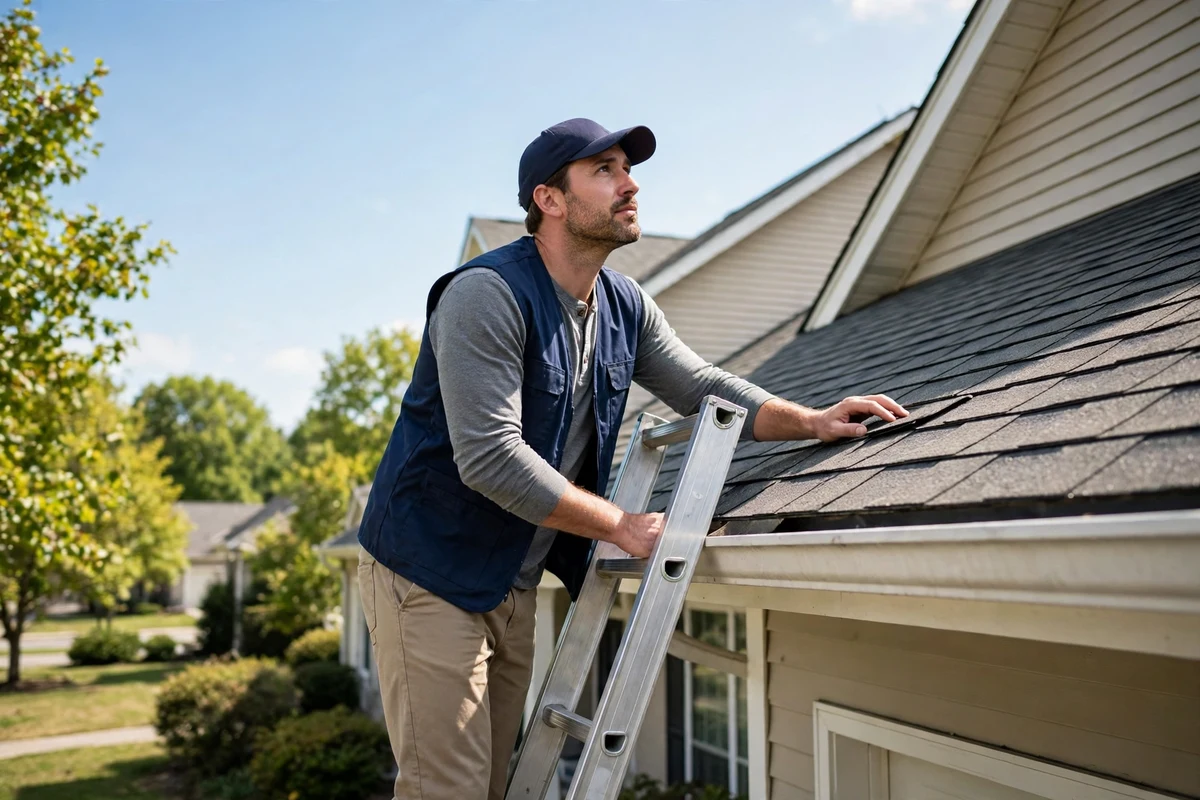
File promptly. Policies have reporting deadlines, and waiting weakens your claim — the insurer can argue the damage grew worse because you waited. These are the steps the Insurance Information Institute recommends after a disaster 5:
- Contact your insurer or agent promptly. Call, use the app, or file online. Have your policy number, the date of the loss, and a short description ready. Ask whether the damage is covered, how long you have to file, whether the claim exceeds your deductible, how long it will take, and whether you need estimates.
- Stop further damage. Put a tarp over a hole in the roof. Board up broken windows. These are temporary repairs, and they protect the home. Save every receipt — temporary repair costs are part of the settlement. Do not start permanent repairs yet. The adjuster has to see the damage first 5.
- Document everything before you clean up. Photograph and video the roof from the ground and, if it is safe, from a ladder. Photograph the inside too: water stains on ceilings, wet insulation, damaged belongings. Take close-ups and wide shots. Photos taken after the cleanup are worth far less.
- Keep damaged items until the adjuster visits. Do not throw away damaged shingles, flashing, or interior items. They are evidence. If something is a health hazard, photograph it thoroughly first 5.
- Meet the adjuster and walk the damage with them. Do not hand over the keys and leave. Walk the roof and the interior together. Have your contractor there if you can — a contractor who knows the repair can point out damage the adjuster might miss. Show the adjuster written, line-by-line bids from licensed contractors 5.
- Get the payment in two parts, if your policy pays replacement cost. The first check is the actual cash value minus your deductible. The second is the withheld depreciation, paid after the repairs are finished and you send the contractor's bill 3. Keep copies of everything you send and receive, and write down the name and phone number of everyone you speak to 5.
Do not sign anything you do not understand, including a settlement release or any form that assigns your claim benefits to a contractor. Ask for a copy of the adjuster's estimate. If the first check looks too small, remember it may be only the first of two — ask whether depreciation was withheld and what you need to send to release it.
Why roof claims get denied — and what to do
Wear and tear. The most common denial. The insurer says the roof failed because it was old, not because of one storm. If your roof is old, photos from right after the storm matter most: missing shingles in a clear pattern, fresh breaks, debris on the roof. A contractor's written opinion that the damage is storm-caused, not age-caused, helps too.
Neglect. The insurer says you knew about a problem and did not fix it. A leak you ignored for a year, missing shingles you never replaced, gutters that rotted the fascia. Keep records of repairs and inspections. They are your answer to a neglect claim.
The damage is below the deductible. This is not a denial of coverage — it is the math. A $12,000 repair against a $15,000 percentage deductible pays nothing. Before you file, compare the repair estimate with your deductible. If the damage is barely above it, paying out of pocket is often simpler, and it avoids a claim on your record.
Flood or earth movement. Water that came from a flood, not from rain through a storm opening, is excluded. So is damage from an earthquake or a landslide. Those need separate policies 6.
Late reporting. Your policy sets a deadline to report. Report as soon as you can, even if you do not yet know the full extent of the damage.
If your claim is denied or the offer is too low, ask for the denial in writing, with the exact policy wording it relies on. Ask for a re-inspection, or send your own contractor's estimate. Appeal inside the company, and if the dispute is only about the amount, your policy usually allows an independent appraisal. You can also file a free complaint with your state insurance department.
Verified against the Insurance Information Institute and the National Association of Insurance Commissioners on November 17, 2026.
The bottom line
Homeowners insurance covers roof damage from sudden events — wind, hail, fire, lightning, falling trees — but not from age, wear, or neglect. Wind and hail are the most common claim cause, at 2.80 claims per 100 homes a year and $14,747 on average from 2019 to 2023. What you get paid turns on two numbers: replacement cost versus actual cash value, which is $14,000 versus $4,000 on the same $15,000 roof, and your deductible, which is often 1% to 5% of your home's insured value — $15,000 on a $300,000 home at 5%. Roof age matters, but as carrier practice, not law. Before the next storm, read your declarations page and know your deductible in dollars — not as a percentage you have never worked out.
Frequently asked questions
- Does homeowners insurance cover roof damage from a storm?
- Yes, in most cases. A standard homeowners policy covers roof damage from sudden, accidental events such as wind, hail, fire, lightning, falling trees, and the weight of ice or snow. Rain that enters through a storm-created opening is generally covered too. What matters is that the damage was sudden and caused by a covered event — not gradual wear.
- Does homeowners insurance cover a roof leak?
- It depends on why the roof leaks. A leak caused by a storm that tore off shingles or broke the roof is generally covered. A slow leak from an aging roof, worn shingles, or poor maintenance is generally not covered, because standard policies exclude wear and tear and deterioration. The line is sudden damage versus gradual damage.
- What is the difference between actual cash value and replacement cost for a roof?
- Replacement cost pays what it costs to repair or replace the roof with one of similar kind and quality, without deducting for age. Actual cash value pays that same cost minus depreciation for the roof's age and condition. The NAIC gives a roof example: $15,000 in damage and a $1,000 deductible. The replacement-cost family gets $14,000; the actual-cash-value family gets $4,000, because $10,000 was taken off for depreciation.
- How much is the deductible for roof damage?
- It depends on your policy. Many policies have a flat deductible, often $1,000. But for wind and hail, many policies use a percentage deductible — typically 1% to 5% of the home's insured value. On a home insured for $300,000, a 5% deductible is $15,000 out of pocket before coverage starts. Nineteen states plus Washington, D.C. have hurricane deductibles, including North Carolina and Virginia. Check your declarations page to see which deductible applies to your roof.
- How old can a roof be for homeowners insurance to cover it?
- There is no national age limit in the law. Many carriers move roofs around 15 to 20 years old to actual cash value payouts, and some require an inspection for roofs 20 years or older. That is carrier practice, and it varies by insurer and state. Your declarations page and policy wording say what applies to your roof — check them before you assume you are covered at replacement cost.
- Does homeowners insurance cover roof damage from a flood or earthquake?
- No. Flood and earthquake are excluded from a standard homeowners policy. Flood cover is a separate policy, usually through the National Flood Insurance Program. If water damaged your roof during a flood, that damage falls under flood insurance, not your homeowners policy. The same applies to earthquake damage, which needs separate earthquake cover.
Sources
Numbers in the text point to these publications. Links open the original source.
- Insurance Information Institute (Triple-I). What is covered by standard homeowners insurance?
- Insurance Information Institute (Triple-I). Facts + Statistics: Homeowners and renters insurance
- National Association of Insurance Commissioners (NAIC). Rebuilding After a Storm: Know the Difference Between Replacement Cost and Actual Cash Value When It Comes to Your Roof
- Insurance Information Institute (Triple-I). Background on: Hurricane and windstorm deductibles
- Insurance Information Institute (Triple-I). Settling insurance claims after a disaster
- Federal Emergency Management Agency (FEMA). Flood insurance (FloodSmart.gov)
Related guides
- What Does Homeowners Insurance Cover? (And What It Does Not Cover)
A standard homeowners policy covers your dwelling, other structures, belongings, living expenses, and liability — but not floods or earthquakes.
- How Much Does Homeowners Insurance Cost? Average Rates by State
The official NAIC average HO-3 premium was $1,737 a year in 2023 data, while modeled 2026 quotes average $2,490 for $400,000 of dwelling coverage.
- Does Homeowners Insurance Cover Flood Damage? NFIP, Costs and the 30-Day Wait
No, a standard homeowners policy excludes flood damage. Flood coverage comes from a separate NFIP or private policy, with a 30-day waiting period.
This guide is general educational information, not insurance, legal or financial advice. Insurance rules and prices vary by state, company and personal circumstances. Confirm anything important with your state insurance department or a licensed professional. Read the full disclaimer.