Home Insurance, cost
How Much Does Homeowners Insurance Cost? Average Rates by State
There is no single average, because every published figure prices a different home. The official NAIC figure, actual premiums written in 2023, is $1,737 a year, and modeled 2026 quotes for a standard profile run higher.
- By
- Ella H.
- Published
- Updated
- Reading time
- 12 min read
Key takeaways
- The official NAIC average HO-3 premium was $1,737 a year in 2023 data published in July 2026, from $923 in Wisconsin to $3,027 in Louisiana.
- Modeled 2026 quotes are higher: NerdWallet averages $2,490 a year for $400,000 of dwelling coverage, and Bankrate averages $2,470 for $300,000.
- Every published average prices a different dwelling amount and profile, so compare the basis, not just the headline number.
- Oklahoma, Nebraska, and Kansas are the most expensive states in modeled 2026 quotes, driven by tornado and hail risk.
- Location, roof age, claims history, deductible, and credit, where allowed, are the biggest drivers of an individual premium.
In this guide

Homeowners insurance costs $1,737 a year on average in the United States, according to the National Association of Insurance Commissioners (NAIC), in its report on 2023 data published in July 2026 1. That is the official figure, and it reflects what people actually paid. Modeled 2026 quotes for a standard profile are higher, averaging $2,490 a year for $400,000 of dwelling coverage in NerdWallet's 2026 analysis 3, because quotes price current rates and a specific coverage amount rather than the mix of policies written in 2023.
Both numbers are honest, and they answer different questions. The NAIC figure tells you what the market actually paid, two and a half years ago. The modeled figures tell you what a typical homeowner might be quoted today for a defined policy. Confusing the two is the most common mistake in reading home insurance prices, so this guide keeps the basis of every figure next to the figure itself.
The official anchor: the NAIC average
The NAIC publishes an annual statistical report on dwelling fire and homeowners policies, and it is the only source that reports actual premiums written across the whole market. In the edition covering data year 2023, published in July 2026, the countrywide average annual premium for an HO-3 policy, the standard owner-occupied form, was $1,737 1. The HO-3 accounted for 79.5% of owner-occupied exposures in the same report, so the figure describes the policy most people actually carry.
The same report gives the state range: the average HO-3 premium in 2023 was $923 in Wisconsin, the lowest state, and $3,027 in Louisiana, the highest 1. Louisiana's average was more than three times Wisconsin's, by our arithmetic, and the gap reflects hurricane risk, rebuilding costs, and the availability of insurers, not the size of the homes alone. The NAIC does not rank states, so any ranking is a sorting of its published figures rather than an official list.
Two caveats belong next to the NAIC figure. First, it is an average of what was actually written, so it blends together small homes and large ones, low deductibles and high ones, and every coverage level. Second, it lags the market by about two and a half years, so a quote you receive in 2026 will usually be higher. Treat the NAIC number as the anchor for comparison, not as a prediction of your bill.
What the modeled 2026 quotes say
Modeled quotes fix a single policy profile and price it in every ZIP code, which makes them useful for comparing states on an equal basis. The profile matters, so read it before comparing.
NerdWallet's analysis, updated May 6, 2026, puts the national average at $2,490 a year, or about $208 a month, for a policy with $400,000 of dwelling coverage, $300,000 of liability coverage, and a $1,000 deductible, for a 40-year-old homeowner with good credit 3. That is modeled pricing from more than 100 insurers, not a record of what anyone paid.
Bankrate's True Cost of Home Insurance report, published August 25, 2025, puts the national average at $2,470 a year, or about $206 a month, for $300,000 of dwelling coverage 2. Bankrate used Quadrant Information Services rates from July 2025 for a profile of married homeowners in a home built in 2017, with a clean claims history and good credit. Bankrate's state figures run from $834 in Vermont to $6,425 in Nebraska on the same $300,000 dwelling basis. Louisiana's $6,274 is the second-highest premium in dollars, but the highest as a share of income, at 10.78% of the median household income.
| Source | Basis | National average per year | Data date |
|---|---|---|---|
| NAIC | Actual HO-3 premiums written, all dwelling amounts | $1,737 | 2023 data, published July 2026 |
| NerdWallet | Modeled quote, $400,000 dwelling, $300,000 liability, $1,000 deductible, good credit | $2,490 | Updated May 2026 |
| Bankrate | Modeled quote, $300,000 dwelling, home built 2017, clean claims, good credit | $2,470 | July 2025 rates |
The three figures differ because they measure different things, not because one of them is wrong. The NAIC figure is lower because it averages all dwelling amounts, including smaller and older homes, and because it is older. The two modeled figures price more coverage in a more expensive market. Other publishers quote different national averages again, usually between about $2,500 and $2,900 a year, and the same rule applies: check the dwelling amount, the deductible, and the date before comparing.
Good to know
A $2,490 average for $400,000 of dwelling coverage is not comparable to a $2,470 average for $300,000 of dwelling coverage, even though the numbers look nearly identical. The first buys a third more dwelling coverage. Always compare the coverage amount beside the price.
Average homeowners insurance cost by state

State averages move in the same direction across sources, even when the dollar figures differ: the Gulf Coast and the tornado belt cost the most, and the Northeast and Hawaii cost the least. The reasons are consistent too: hurricane and storm surge risk on the Gulf Coast, tornado and hail risk in the central states, and wildfire risk in parts of the West.
In the NAIC's 2023 actual-premium data, the five highest average HO-3 premiums were Louisiana at $3,027, Texas at $2,864, Florida at $2,779, Colorado at $2,492, and Oklahoma at $2,486, against a national average of $1,737 1. The lowest was Wisconsin at $923.
In NerdWallet's modeled 2026 quotes for the $400,000 dwelling profile, the most expensive states were Oklahoma at $7,255 a year, Nebraska at $6,015, Kansas at $5,455, and Texas at $4,915 3. The cheapest were Hawaii at $900, Vermont at $1,170, Delaware at $1,365, and Alaska at $1,385. Hawaii looks cheap in the modeled figures because hurricane wind coverage is typically excluded from the standard policy there and sold separately, so the number does not buy the same coverage as in other states.
| State | NAIC 2023 actual average (HO-3) | NerdWallet 2026 modeled ($400,000 dwelling) |
|---|---|---|
| Louisiana | $3,027 | Not in the top or bottom lists cited |
| Texas | $2,864 | $4,915 |
| Florida | $2,779 | Not in the top or bottom lists cited |
| Colorado | $2,492 | Not in the top or bottom lists cited |
| Oklahoma | $2,486 | $7,255 |
| Nebraska | Not in the top five cited | $6,015 |
| Kansas | Not in the top five cited | $5,455 |
| Vermont | Not in the bottom lists cited | $1,170 |
| Delaware | Not in the bottom lists cited | $1,365 |
| Alaska | Not in the bottom lists cited | $1,385 |
| Hawaii | Not in the bottom lists cited | $900 |
| Wisconsin | $923 | Not in the top or bottom lists cited |
| National average | $1,737 | $2,490 |
The two columns are not the same measure, and they should not be averaged together or treated as a trend. The NAIC column is what people actually paid in 2023 across all coverage levels. The NerdWallet column is what a single defined policy would cost in 2026. The gap between them is widest in Oklahoma, Nebraska, and Kansas, where severe convective storms have pushed modeled rates up faster than the national average.
What drives your premium
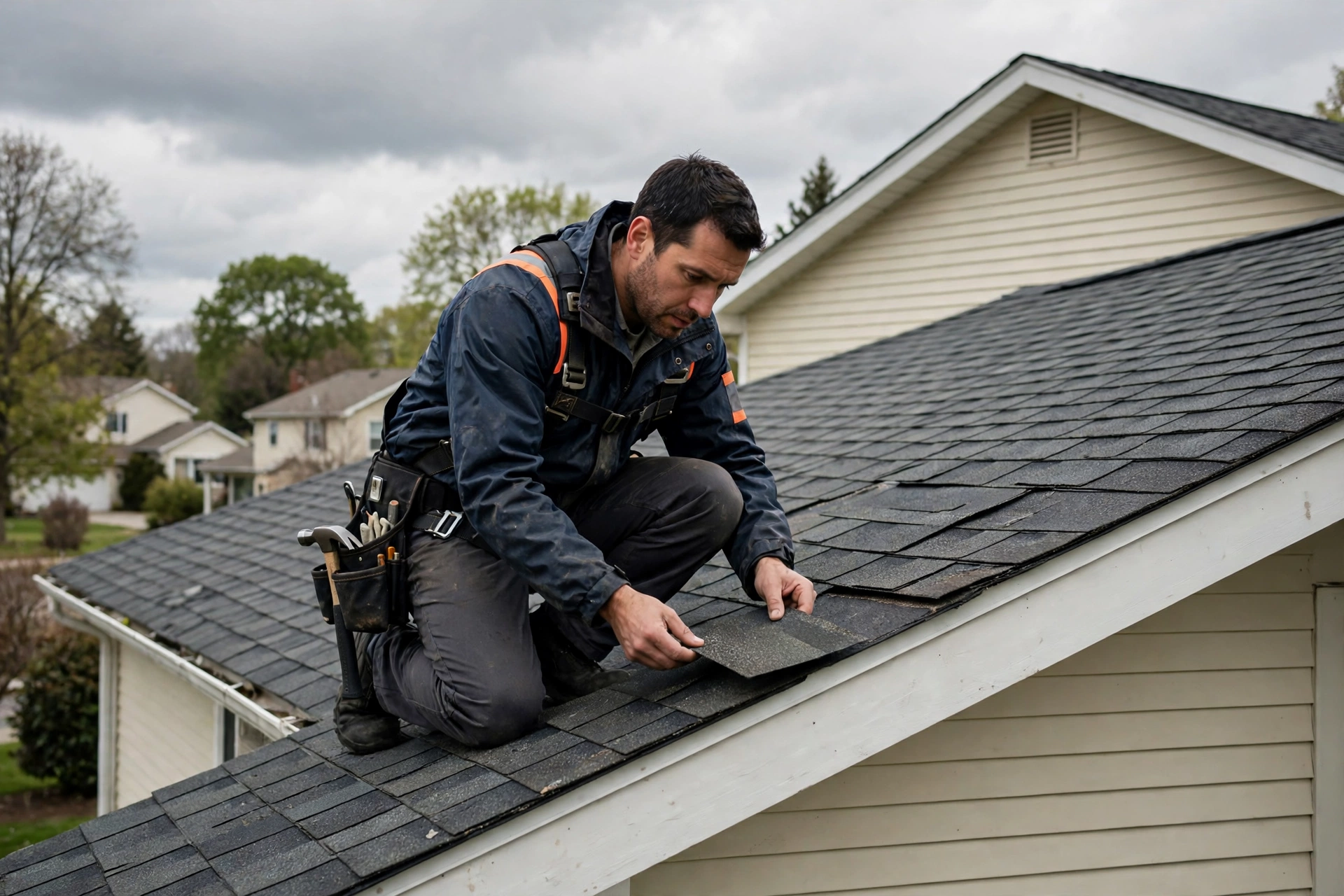
Your premium is set by the insurer's estimate of two things: how likely you are to file a claim, and how expensive that claim would be. The biggest factors are:
Location and weather. ZIP code is the single largest driver for most homes. Hurricane exposure on the Gulf Coast, tornado and hail exposure in the central states, wildfire exposure in the West, and even the distance to the nearest fire station all move the price. NOAA counted 27 billion-dollar weather and climate disasters in the United States in 2024, the second-highest annual total since its record began in 1980 4, and that frequency is the main reason insurers cite for higher rates.
The home itself. Age, construction type, roof age and material, square footage, and the cost to rebuild all matter. A new roof usually lowers the premium, and an old roof can raise it sharply or push the roof to actual cash value settlement. A home with updated wiring, plumbing, and heating is cheaper to insure than one with original systems from the 1960s.
Coverage amount and deductible. More dwelling coverage costs more, and a lower deductible costs more, because the insurer takes on more of each loss. Raising the deductible from $1,000 to $2,500 is one of the largest levers a homeowner controls, provided the higher amount is affordable after a loss.
Claims history. A past claim, especially a water claim, can raise the premium for several years, and some insurers charge more after a single claim. A home with a history of claims can also be harder to place with a standard insurer.
Credit-based insurance score. In most states, insurers use a credit-based insurance score, built from credit history, to set premiums, and a poor score can raise the price substantially. California, Maryland, and Massachusetts ban or heavily restrict the use of credit in homeowners pricing, so the effect depends on where you live 5.
Discounts. Most insurers offer discounts for bundling home and auto coverage, for monitored alarms and smoke detectors, for a new roof, for loyalty, and for paying the premium in full rather than monthly. Discounts vary by insurer and state, and they are worth asking about explicitly, because they are not always applied automatically.
Tip
Get quotes with identical coverage limits, deductibles, and endorsements from at least three insurers, and compare the declarations pages, not just the premium. A cheaper quote with a lower dwelling limit or an actual cash value roof is not the same policy.
Why premiums have risen
Premiums have risen faster than general inflation in recent years, and the causes are well documented. Rebuilding costs rose with labor and materials prices. Reinsurance, the insurance that insurers buy to cover catastrophe losses, became more expensive after several years of heavy storm losses. And the frequency of large weather events stayed high: the five years from 2020 to 2024 averaged 23 billion-dollar disasters a year in the United States, against a long-run average of about 9 a year in the earlier decades of the NOAA record 4.
The increases have not been even. Inland states exposed to severe thunderstorms and hail have seen some of the steepest rises, while some coastal markets have seen rates flatten after regulatory reforms. That unevenness is another reason state averages tell you little about your own renewal: two homes in the same state can have very different trajectories depending on roof age, claims, and the insurer's appetite for that ZIP code.
How to lower the cost without losing coverage
The cheapest way to cut a premium is usually to raise the deductible, but only to an amount you could pay on short notice after a storm. A $2,500 deductible that you cannot pay is worse than a $1,000 deductible that you can.
Other steps that usually help: bundle home and auto with the same insurer, ask about every discount and confirm which ones are actually applied, keep the roof in good condition and document its age, fix small water issues before they become claims, and shop the policy every two or three years or after a major life change. Avoid filing small claims that you could pay yourself, because a claim on the record can raise the premium for years and cost more than the repair.
Do not cut the dwelling limit to save money. A limit below the cost to rebuild triggers the 80% rule, which reduces claim payments even on partial losses, and a limit set to market value rather than replacement cost is the most common way homeowners become underinsured. Our guide to how much homeowners insurance you need walks through the calculation.
What changed in 2026
The 2026 change that matters most for prices is the arrival of fresh official data. The NAIC's report on 2023 data, published in July 2026, replaced the 2022 edition as the latest official benchmark, and the countrywide HO-3 average in it is $1,737 1. NerdWallet also updated its modeled rates in May 2026, with a national average of $2,490 for the $400,000 dwelling profile 3. Both updates point the same way: the market is more expensive than the last official figure suggested, and the gap between the cheapest and most expensive states keeps widening.
The other 2026 note is the end of the NOAA billion-dollar disaster series, which stopped after calendar year 2024 4. There will be no official 2025 count in that series, so future articles will need a different yardstick for disaster frequency. The 2024 count of 27 events remains the last published figure, and it is the one insurers were pricing against in 2026.
Frequently asked questions
How much is homeowners insurance for a $300,000 house? Bankrate's 2025 analysis puts the national average at $2,470 a year for $300,000 of dwelling coverage, based on July 2025 Quadrant rates 2. The figure varies widely by state, from $834 in Vermont to $6,425 in Nebraska on the same basis.
How much is homeowners insurance for a $400,000 house? NerdWallet's 2026 analysis puts the national average at $2,490 a year for $400,000 of dwelling coverage, $300,000 of liability, and a $1,000 deductible, for a 40-year-old homeowner with good credit 3.
Is homeowners insurance cheaper if I pay annually? Often yes. Many insurers charge installment fees for monthly payments, and some offer a paid-in-full discount. If your mortgage servicer pays from escrow, the choice may not be yours, so check the escrow arrangement.
Why did my premium go up if I never filed a claim? Premiums are set for a pool of similar homes, not only for you. Higher rebuilding costs, more frequent storms in your region, and higher reinsurance costs raise rates for the whole pool, even for homeowners with no claims.
Verified against the National Association of Insurance Commissioners (NAIC) homeowners insurance report on November 15, 2026.
The bottom line
There is no single average homeowners insurance cost, only averages with a stated basis. The official NAIC figure is $1,737 a year for an HO-3 in 2023 data, published July 2026, ranging from $923 in Wisconsin to $3,027 in Louisiana 1. Modeled 2026 quotes are higher, at $2,490 for $400,000 of dwelling coverage in NerdWallet's May 2026 analysis 3 and $2,470 for $300,000 of dwelling coverage in Bankrate's 2025 report 2. Your own price depends on your state, your roof, your claims history, your deductible, and your coverage amount. Get three quotes with identical coverage, and read the dwelling limit and the roof terms before you read the premium.
Frequently asked questions
- How much does homeowners insurance cost per month?
- At the NAIC average HO-3 premium of $1,737 a year in 2023 data, about $145 a month. At NerdWallet's modeled 2026 average of $2,490 a year for $400,000 of dwelling coverage, about $208 a month. Your own price depends on your state, home, and coverage.
- What is the average homeowners insurance cost in 2026?
- It depends on the basis. The official NAIC figure is $1,737 a year for an HO-3 in 2023 data published July 2026. NerdWallet's modeled 2026 average is $2,490 a year for $400,000 of dwelling coverage, and Bankrate's 2025 figure is $2,470 for $300,000 of dwelling coverage.
- Which state has the most expensive homeowners insurance?
- In the NAIC's 2023 actual-premium data, Louisiana was highest at $3,027 a year. In NerdWallet's modeled 2026 quotes, Oklahoma was highest at $7,255 a year for $400,000 of dwelling coverage. The two figures measure different things, so they are not directly comparable.
- Why is homeowners insurance so expensive now?
- The main drivers are more frequent and more expensive weather disasters, higher rebuilding costs, and higher reinsurance costs that insurers pass through. NOAA counted 27 billion-dollar weather disasters in the United States in 2024, the second-highest annual total in its record.
- Does a higher deductible lower homeowners insurance cost?
- Yes. Raising the deductible from $1,000 to $2,500 usually lowers the premium, because you take on more of the risk. Only raise it to an amount you could pay out of pocket after a loss.
- Can I get homeowners insurance quotes online?
- Yes, most insurers and comparison sites offer online quotes, but a quote is not a price until underwriting is complete. Get quotes with identical coverage limits and deductibles so the comparison is honest.
Sources
Numbers in the text point to these publications. Links open the original source.
- National Association of Insurance Commissioners (NAIC). Dwelling Fire, Homeowners Owner-Occupied, and Homeowners Tenant and Condominium/Cooperative Unit Owner's Insurance Report
- Bankrate. The True Cost of Home Insurance (2025)
- NerdWallet. How Much Is Homeowners Insurance? Average 2026 Rates
- National Oceanic and Atmospheric Administration (NOAA). Billion Dollar Weather and Climate Disasters
- National Association of Insurance Commissioners (NAIC). Credit-Based Insurance Scores
Related guides
- What Is Homeowners Insurance and How Does It Work?
Homeowners insurance is a contract that pays to repair or rebuild your home after a covered loss and protects you if someone is hurt on your property.
- How Much Homeowners Insurance Do I Need? Dwelling, Liability and the 80% Rule
Start with the full cost to rebuild your home, not its market value, and keep dwelling coverage at or above 80% of that cost.
- What Does Homeowners Insurance Cover? (And What It Does Not Cover)
A standard homeowners policy covers your dwelling, other structures, belongings, living expenses, and liability — but not floods or earthquakes.
This guide is general educational information, not insurance, legal or financial advice. Insurance rules and prices vary by state, company and personal circumstances. Confirm anything important with your state insurance department or a licensed professional. Read the full disclaimer.