Car Insurance, coverage types
Uninsured and Underinsured Motorist Coverage: What It Covers, What It Costs, and the 2025 Rule Changes
One in seven drivers on American roads has no insurance at all — and one in three is uninsured or underinsured. Two states rewrote their rules in 2025, so what you were told last year may already be wrong.
- By
- Ella H.
- Published
- Updated
- Reading time
- 15 min read
Key takeaways
- In 2023, 15.4% of U.S. drivers — more than 1 in 7 — had no insurance, and 33.4% were uninsured or underinsured, about 1 in 3.
- North Carolina made uninsured and underinsured motorist coverage mandatory at 50/100/50 limits on July 1, 2025, and eliminated the old underinsured setoff. Louisiana raised its 'No Pay, No Play' thresholds to $100,000/$100,000 on August 1, 2025.
- Uninsured motorist bodily injury pays your medical bills and lost wages when an at-fault driver has no insurance, including hit-and-run crashes and when you are hit as a pedestrian.
- Uninsured motorist coverage is mandatory in 20 states plus Washington, D.C., per the Insurance Information Institute. In other states your insurer must usually offer it, and you can decline it, often in writing.
- Stacking combines your uninsured and underinsured motorist bodily injury limits across the vehicles on one policy, or across policies. Unstacked is the usual default and costs less.
In this guide
- What changed recently
- How many drivers are uninsured?
- What uninsured motorist coverage pays for
- What it does not cover
- Is it required in your state?
- Stacking, in plain words
- How much does it cost?
- "No Pay, No Play" and the penalties for driving uninsured
- How much coverage should you buy?
- The bottom line
- Frequently asked questions
- Sources
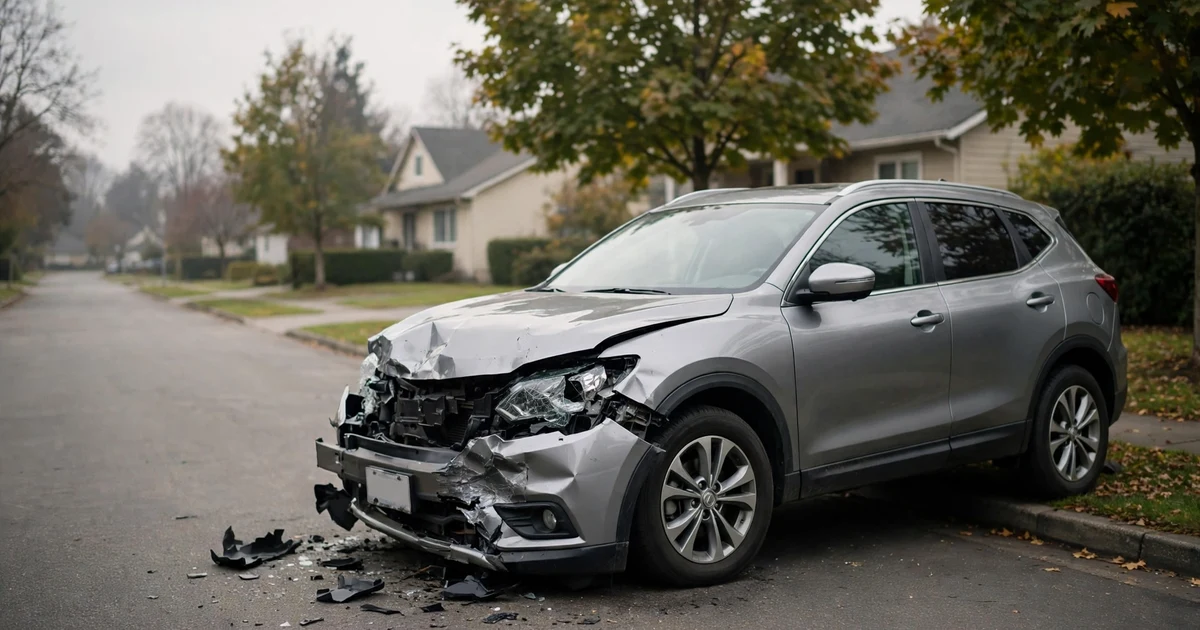
The driver who hit you may not have insurance at all. That is not a rare edge case. In 2023, 15.4% of U.S. motorists were uninsured — more than 1 in 7 drivers — according to the Insurance Research Council's 2025 study, as republished by the Insurance Information Institute 1 2. And when you add the drivers who carry insurance but not enough of it, the number is worse: 33.4% of U.S. drivers were either uninsured or underinsured in 2023, about 1 in 3 2. Uninsured and underinsured motorist coverage exists for exactly this situation. It pays your medical bills and lost wages when the driver who caused the crash cannot pay — because they have no insurance, because their limits run out, or because they drove away and were never identified.
Two states rewrote their rules in 2025, which is why this guide leads with what changed. North Carolina made uninsured and underinsured motorist coverage mandatory on July 1, 2025, at new 50/100/50 limits, and changed how underinsured claims are calculated 7. Louisiana raised its "No Pay, No Play" thresholds to $100,000 on August 1, 2025, which changes what an uninsured driver can recover after a crash 8. If the last guide you read was written before those dates, its state numbers may already be wrong.
This guide explains what each part of the coverage pays for, what it does not cover, where it is required, how much it costs, and how stacking works — in plain words, with the figures dated and sourced so you can check them.
What changed recently
North Carolina, July 1, 2025. The state's minimum liability limits rose from 30/60/25 to 50/100/50 — $50,000 for injuries to one person, $100,000 for injuries in one accident, and $50,000 for property damage — and uninsured and underinsured motorist coverage became mandatory on all new and renewed policies at matching 50/100/50 limits 7. The change also eliminated the old underinsured motorist "setoff." Before the change, an underinsured claim was reduced by what the at-fault driver's liability policy paid; now the underinsured coverage pays in full on top of the at-fault driver's liability payment. The law also allowed stacking of underinsured motorist coverage across policies, and extended the inexperienced-operator surcharge period from 3 years to 8 years for drivers licensed after July 1, 2025. The average state-minimum premium was expected to rise by about $47 a year, from $476 to $523 7. The practical result: a North Carolina driver renewing after July 1, 2025, has more uninsured and underinsured protection than before, and pays more for the minimum policy.
Louisiana, August 1, 2025. Louisiana's "No Pay, No Play" law changed the thresholds for crashes on or after August 1, 2025, under Act 16 of 2025. The thresholds rose from $15,000 of bodily injury and $25,000 of property damage to $100,000 of bodily injury and $100,000 of property damage 8. The rule means an uninsured driver cannot recover the first $100,000 of bodily injury damages or the first $100,000 of property damage after a crash. That is a deduction from what they can recover, not a cap on the other driver's liability. Exceptions apply: the rule does not apply when the at-fault driver was convicted of driving while intoxicated, caused the crash intentionally, committed a hit-and-run or a felony, or when the injured person was a passenger or the owner of a legally parked vehicle 8. For Louisiana drivers, the 2025 change made driving without insurance far more expensive in a different way — not through a fine, but through the damages you lose the right to claim.
No new national data on uninsured drivers appeared in 2026. The February 2025 Insurance Research Council study, covering 2023 data, is still the latest, so every national figure in this guide is dated 2023 and should be read that way 2.
How many drivers are uninsured?
The national figure is 15.4% in 2023, up from 12.4% in 2017, 11.6% in 2019, and 14.3% in 2020 1 2. One detail matters for how you read that number: the Insurance Research Council estimates it from the ratio of uninsured motorist claims to bodily injury claims. It is an estimate, not a headcount — nobody has a list of every uninsured driver. The trend is still the important part: the share has climbed through most of the last decade, and it rose sharply in 2020 and has not come back down.
The underinsured share is nearly as large. In 2023, 18.0% of drivers were underinsured — they had insurance, but their limits were low enough that a serious crash could exceed them — and the combined uninsured-or-underinsured rate of 33.4% was 10 percentage points higher than in 2017 2. That is the number that should shape how you think about your own limits. The driver who hits you is not only possibly uninsured; one driver in three is uninsured or carrying limits too low to pay for a serious crash.
The risk is not spread evenly across the country. The highest uninsured rates in 2023 were in Mississippi (28.2%), New Mexico (24.1%), Washington, D.C. (23.1%), Michigan (22.3%), Tennessee (21.3%), Missouri (20.7%), Florida (20.6%), California (20.4%), Colorado (19.7%), and Washington (19.1%) 1. The lowest were in Maine (5.7%), Utah (6.2%), Idaho (6.4%), and Wyoming (6.7%) 1. If you drive in Mississippi, more than one driver in four around you has no insurance. If you drive in Maine, it is closer to one in eighteen. Your state's rate is one of the best reasons to check your uninsured motorist limits: the coverage matters most exactly where uninsured driving is most common.
What uninsured motorist coverage pays for
Uninsured and underinsured motorist coverage is really two or three coverages sold under one name, and the parts do different jobs. The names are similar enough that declarations pages confuse people, so here is each part in turn.
Uninsured motorist bodily injury (UMBI) pays medical bills and lost wages for you and your passengers when an at-fault driver has no insurance 3. It also applies if you are hit as a pedestrian, and if you are the victim of a hit-and-run crash — a driver who cannot be identified counts as an uninsured driver 3 1. This is the core of the coverage, and it is the part that is mandatory in the states that require it. If the other driver has no insurance and you are hurt, UMBI is what pays the hospital and replaces the wages you lose while you recover.
Uninsured motorist property damage (UMPD), where it is offered, pays for damage to your vehicle after a crash with an uninsured driver, and per the Insurance Information Institute it generally also covers other personal property such as your house or fence 3. Two warnings belong here. First, UMPD is not offered in every state — in many states, damage to your car after an uninsured-driver crash falls to your collision coverage instead. Second, many top guides imply that uninsured motorist coverage always covers your car. It does not. Check whether your policy includes UMPD, and if it does not, understand that your collision coverage is what repairs your car.
Underinsured motorist bodily injury (UIM) pays the shortfall when the at-fault driver has insurance, but not enough to cover your losses 3. This is the coverage for the one-in-three problem. Imagine the other driver carries a state minimum of $25,000 per person and your medical bills come to $80,000. Their liability policy pays its $25,000, and your underinsured coverage pays toward the remaining $55,000, up to your own UIM limit. Without UIM, that gap comes out of your health insurance, your savings, or a lawsuit against a driver who may have nothing to collect. In the states that require UIM, the required minimums are usually the same as the uninsured minimums — but only a handful of states require UIM at all, which is why it is worth buying even where it is optional 4 5.
What it does not cover
Uninsured motorist coverage does not pay for your own injuries when you cause the crash — that is what your health insurance, medical payments coverage, or personal injury protection is for 3. It does not pay for damage to your car in states without UMPD, as explained above; that falls to collision coverage 3. And it does not apply to accidents with insured drivers who have enough coverage — if the other driver's limits cover your losses, there is no uninsured or underinsured claim to make 3.
It also does not pay for everything a serious crash costs. UMBI pays medical bills and lost wages, but the limits you buy are caps, and a policy with 25/50 limits pays at most $25,000 for one person's injuries. A single hospital stay can exceed that. The coverage protects you from the uninsured driver; it does not protect you from buying limits that are too low.
Is it required in your state?
Uninsured motorist coverage is mandatory in 20 states plus Washington, D.C., according to the Insurance Information Institute, and ValuePenguin's state table lists the same 20 states plus D.C. 4 5. In the other states, insurers must usually offer it, but the driver may decline — usually in writing. Only a handful of states require underinsured motorist coverage 4.
We are not printing a definitive named list of the mandatory states here, because the sources disagree on the edge cases. The two main sources count 20 states plus D.C., while other pages list 21, adding Rhode Island and dropping New Hampshire. New Hampshire is the awkward case: insurance is only required there if you choose to buy it at all. Until that is settled state by state, the safe statement is the count — 20 states plus D.C. — and the practical step is to check your own state's rule and your own declarations page.
The table below shows the minimum uninsured motorist bodily injury limits in the states where underinsured motorist coverage is mandatory, from ValuePenguin's table 5. Read it with one caution: these are pre–July 2025 figures for North Carolina, which now requires 50/100/50, as described above.

| State | Minimum uninsured motorist bodily injury limits |
|---|---|
| Connecticut | 25/50 |
| Illinois | 25/50 |
| Kansas | 25/50 |
| Maine | 50/100 |
| Maryland | 30/60 |
| Massachusetts | 25/50 |
| Minnesota | 25/50 |
| Missouri | 25/50 |
| Nebraska | 25/50 |
| New Hampshire | 25/50 |
| New York | 25/50 |
| North Carolina | 30/60 (now 50/100/50 as of July 1, 2025) |
| North Dakota | 25/50 |
| Oregon | 25/50 |
| South Carolina | 25/50 |
| South Dakota | Mandatory, no minimum set |
| Vermont | 50/100 |
| Virginia | 30/60 |
| Washington, D.C. | 25/50 |
| West Virginia | 25/50 |
| Wisconsin | 25/50 |
Source: ValuePenguin uninsured/underinsured motorist table, with the North Carolina row updated for the July 1, 2025 law 5 7.
The limits are written as two numbers, per person and per accident. "25/50" means the policy pays at most $25,000 for injuries to one person and $50,000 for injuries to everyone hurt in one crash. The state minimum is a floor. A driver who buys only the minimum in a mandatory state has the coverage the law requires — and in a serious crash, may still have far less protection than the medical bills demand.
Stacking, in plain words
Stacking is the part of this coverage that confuses people most, and the comparison sites do not help: they use labels for the two kinds of stacking that are swapped between sources, so this guide uses plain descriptions instead — "within one policy" and "across policies" — and skips the jargon entirely.
Stacking combines your uninsured and underinsured motorist bodily injury limits across vehicles. It applies to bodily injury limits only; it does not apply to liability, collision, comprehensive, or property damage coverage 5 4 6. There are two ways it can work. Within one policy: if you insure two cars on the same policy and each carries $15,000 of underinsured motorist coverage, stacking would make $30,000 available for one crash 5. Across policies: limits from separate policies can also be combined in states that allow it. The Insurance Information Institute gives a family example: in a three-car household where each car carries $20,000 of uninsured motorist coverage, stacking would make $60,000 available 4.
Whether you can stack depends on your state. About half of the states prohibit stacking, according to the Insurance Information Institute, but the exact count is disputed — different sources give different numbers, so this guide does not publish one 4. Unstacked is the usual default, and stacking costs more, because you are buying access to a larger pool of limits 5 6. North Carolina's July 2025 law is a live example of the rules moving: it newly allowed stacking of underinsured motorist coverage across policies 7.
One more warning about stacking advice online. One widely read comparison page claims that Pennsylvania and Maryland ban stacking outright — yet its own list of states that ban stacking does not include Pennsylvania, and the Insurance Information Institute says Pennsylvania (and Missouri) have upheld stacking provisions. Pennsylvania is widely documented as a state where stacking is the default. Do not rely on a single site's stacking list for your state; ask your insurer or your state department of insurance whether stacking is available, what it costs, and whether your policy is stacked or unstacked.
How much does it cost?
Uninsured motorist coverage is one of the cheaper lines on a car insurance policy, and the price question is where most guides go wrong: they quote a single average with no method behind it. Only one figure in this guide's research was verified at its source with its method stated, so it is the only cost figure we publish.
ValuePenguin's sample quotes — from Geico, for a 34-year-old married man — put uninsured motorist bodily injury at $33–$76 per year at 25/50 limits, and $86–$134 per year at 100/300 limits 5. The range exists because the price varies by state. Two examples from the same sample show the spread: in Massachusetts, 25/50 uninsured motorist coverage cost $11 a year and underinsured coverage cost $2 a year; in Oklahoma, the same 25/50 limits cost $41 for uninsured and $41 for underinsured 5. Your price will differ — different state, different driver, different insurer — but the order of magnitude is the point: moving from 25/50 to 100/300 roughly doubles or triples a line item that starts in the tens of dollars a year.
We deliberately omit the other cost figures that circulate online. One well-known comparison site's $136-a-year average for uninsured motorist bodily injury is repeated by dozens of secondary pages, but the page itself was not opened and verified in this research. Other pages quote $20–$50 or $50–$75 a year with no method shown at all. A figure with no method is not a fact; it is a rumor with a dollar sign. When you shop, the reliable number is the one on your own quote, at the limits you actually want, next to the price of the same limits from another insurer.
"No Pay, No Play" and the penalties for driving uninsured
About a dozen states have "No Pay, No Play" laws, according to the Insurance Information Institute: uninsured drivers are barred from suing for non-economic damages such as pain and suffering after a crash 4. The states include Indiana, Missouri, Michigan, California (under Proposition 213), New Jersey, and Louisiana, among others. Louisiana's August 2025 change, described above, is the newest version of this idea — and the most expensive one, because the threshold an uninsured driver cannot recover rose to $100,000 8.
The penalties for driving without insurance are separate from the lawsuit limits, and they are steep. They include fines of up to $5,000 for a subsequent offense, license or registration suspension or revocation, and in some states jail, plate confiscation, or impoundment of the vehicle 4. The exact penalties vary by state, and a first offense is usually cheaper than a repeat one — but the pattern is the same everywhere: the fine is the smallest part of the cost. A suspended license, a revoked registration, and an impounded car are what turn a missing policy into a real problem, and an uninsured crash on top of that can leave the driver personally liable for the other person's medical bills.
How much coverage should you buy?
Start with the limits you already carry for liability. A common rule of thumb is to match your uninsured and underinsured limits to your liability limits: if you carry 100/300 liability, carry 100/300 uninsured and underinsured motorist coverage too. The logic is simple. Your liability limits say how much protection you think a serious crash deserves when you hurt someone else; your uninsured limits say how much protection you think a serious crash deserves when someone else hurts you. There is no good reason for the second number to be much smaller than the first.
Then look at your state's uninsured rate. If you drive in Mississippi, New Mexico, Michigan, or Florida — states where roughly one driver in five has no insurance — the coverage is doing more work for you than it does for a driver in Maine or Utah, and the case for higher limits is stronger 1. Then check the price. The jump from 25/50 to 100/300 cost $86–$134 a year in the verified sample quotes, which is a small price for four times the per-person limit 5. Get the quote for both levels on your own policy before deciding the minimum is enough.
Finally, check three things on your declarations page today: whether you have uninsured motorist bodily injury, whether you have underinsured motorist bodily injury (not the same thing), and whether your policy includes uninsured motorist property damage or leaves car repairs to collision coverage. If any of those lines is missing or lower than you expected, ask your insurer what it costs to add or raise it. And if your state lets you decline the coverage in writing, think twice before signing that form: the signature saves a small amount of premium and gives up the coverage that pays when the other driver has nothing.
Verified against the Insurance Research Council's 2025 study Uninsured and Underinsured Motorists: 2017–2023, the Insurance Information Institute, ValuePenguin, and the North Carolina and Louisiana 2025 law changes on November 22, 2026.
The bottom line
One driver in seven has no insurance, and one in three is uninsured or underinsured — so the driver who hits you is likely to be the one who cannot pay. Uninsured motorist bodily injury pays your medical bills and lost wages when that happens, including hit-and-run crashes and when you are hit as a pedestrian; underinsured motorist coverage pays the gap when the other driver's limits run out. The coverage is mandatory in 20 states plus Washington, D.C., and usually offered everywhere else. The 2025 changes matter: North Carolina made the coverage mandatory at 50/100/50 and eliminated the underinsured setoff, and Louisiana raised its "No Pay, No Play" thresholds to $100,000. The verified cost is modest — $33–$76 a year at 25/50 limits, $86–$134 at 100/300 in a Geico sample — and the most common mistake is buying the minimum and discovering after a crash that it was not enough. Check your declarations page, match your uninsured limits to your liability limits, and make sure underinsured coverage is on the policy, not just uninsured.
Frequently asked questions
- What does uninsured motorist coverage cover?
- Uninsured motorist bodily injury pays your medical bills and lost wages — and those of your passengers — when an at-fault driver has no insurance, when you are hit as a pedestrian, or in a hit-and-run crash. Uninsured motorist property damage, where offered, pays for damage to your car. Underinsured motorist coverage pays the shortfall when the at-fault driver's limits do not cover your losses.
- Is uninsured motorist coverage required?
- It depends on your state. The Insurance Information Institute counts 20 states plus Washington, D.C., where uninsured motorist coverage is mandatory. In most other states your insurer must offer it, and you may decline it, usually in writing. Only a handful of states require underinsured motorist coverage.
- How much does uninsured motorist coverage cost?
- In a verified set of Geico sample quotes for a 34-year-old married man, uninsured motorist bodily injury at 25/50 limits cost $33–$76 per year, and at 100/300 limits it cost $86–$134 per year. The exact price varies by state, limits, and insurer.
- What is stacked uninsured motorist coverage?
- Stacking combines your uninsured and underinsured motorist bodily injury limits across vehicles — within one policy or across policies — so more coverage is available after a crash. For example, two cars each with $15,000 of underinsured motorist coverage would give $30,000 stacked. Unstacked is the usual default, and stacking costs more.
- Does uninsured motorist coverage pay for a hit-and-run?
- Yes. A hit-and-run driver who cannot be identified counts as an uninsured driver, so your uninsured motorist coverage responds. Report the crash to the police promptly and tell your insurer, because a police report supports the claim.
- What changed about uninsured motorist coverage in 2025?
- In North Carolina, uninsured and underinsured motorist coverage became mandatory at matching 50/100/50 limits on July 1, 2025, the old underinsured setoff was eliminated, and stacking across policies was allowed. In Louisiana, the 'No Pay, No Play' thresholds rose to $100,000 of bodily injury and $100,000 of property damage on August 1, 2025.
Sources
Numbers in the text point to these publications. Links open the original source.
- Insurance Information Institute (Triple-I). Top 10 Highest And Lowest States By Estimated Percentage Of Uninsured Motorists, 2023
- Insurance Research Council (IRC). Uninsured and Underinsured Motorists: 2017-2023, news release of February 20, 2025
- Insurance Information Institute (Triple-I). Protect yourself against uninsured motorists
- Insurance Information Institute (Triple-I). Background on: Compulsory auto/uninsured motorists
- ValuePenguin. Uninsured and Underinsured Motorist Coverage Car Insurance (updated June 30, 2026)
- MoneyGeek. Stacked vs. Unstacked Car Insurance
- CarInsurance.com. North Carolina's auto insurance law changes: What drivers need to know (published June 27, 2025; updated June 11, 2026)
- Keith Magness, Attorney (law firm; quotes La. R.S. 32:866). Louisiana's No Pay, No Play Law: The $100,000 Rule and Its Exceptions (updated November 19, 2026)
Related guides
- Liability Car Insurance Explained: Coverage, Limits and Costs
What liability car insurance covers, how to read limits such as 30/60/25, what each state requires, what it costs on average and how much to carry.
- Collision Car Insurance: What It Covers and When You May Need It
Collision insurance pays to repair your car after a crash, whoever was at fault. See what it covers, what it costs and how to decide whether to keep it.
- Full Coverage Car Insurance: What It Covers and How Much It Costs
Full coverage usually means liability plus collision and comprehensive. See what that includes, what it leaves out, what it costs and when to keep it.
This guide is general educational information, not insurance, legal or financial advice. Insurance rules and prices vary by state, company and personal circumstances. Confirm anything important with your state insurance department or a licensed professional. Read the full disclaimer.