Car Insurance, coverage types
Gap Insurance: What It Covers, What It Costs, and Who Actually Needs It
Standard car insurance pays what your car is worth — not what you still owe on it. Gap insurance covers the difference, but the price depends heavily on where you buy it.
- By
- Ella H.
- Published
- Updated
- Reading time
- 14 min read
Key takeaways
- Gap insurance pays the difference between what you owe on your loan or lease and what your insurer pays for a totaled or stolen car. Standard insurance pays only the car's current value.
- Through your auto insurer, gap coverage costs about $50 to $150 a year. From a dealer or lender, the same protection usually costs a flat $500 to $700, often rolled into the loan.
- The old figure of about $20 a year is out of date. The Insurance Information Institute's current figure is $50 to $150 a year, and many guides still print the old number.
- Gap coverage pays only on a total loss or theft — not on a repairable crash — and in most cases it does not cover your deductible.
- You need it most in the first year or two of a loan, when you owe more than the car is worth. Once you owe less than the car is worth, you can usually drop it and may be owed a refund.
In this guide

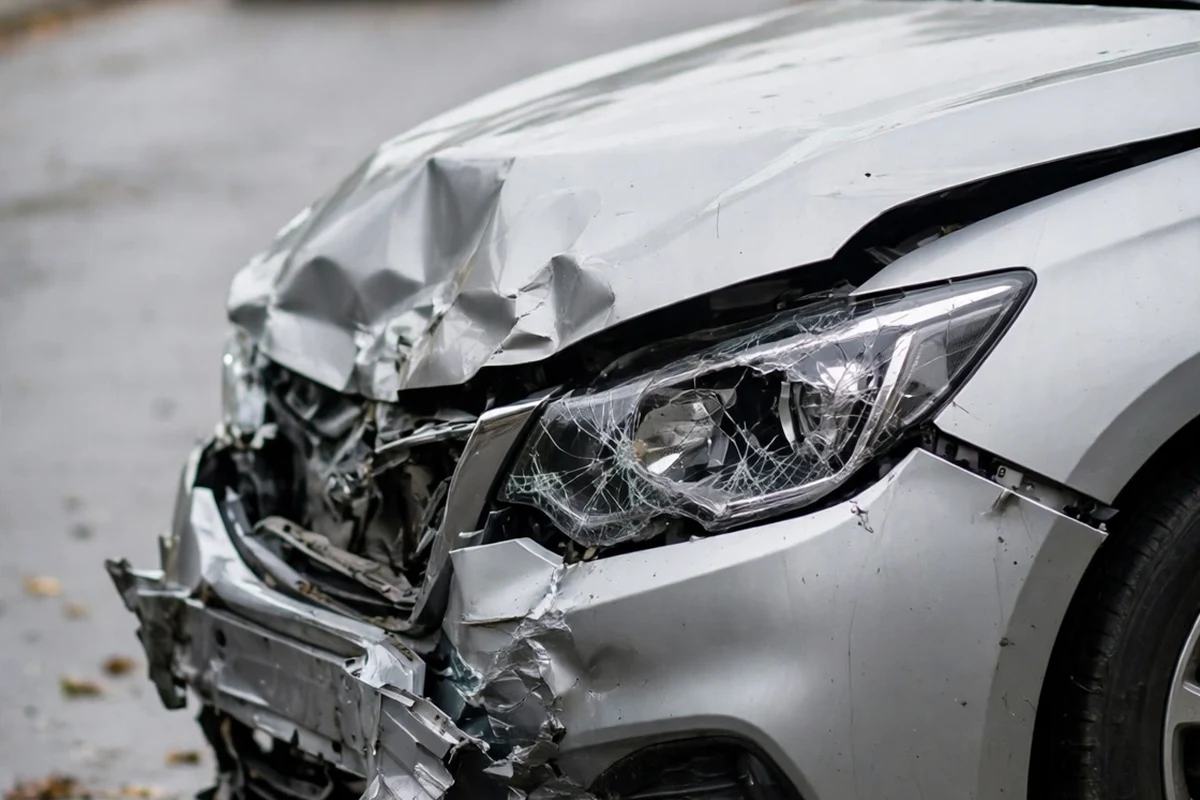
Here is the problem gap insurance solves. You buy a car for $30,000 with a loan. A year later, the car is totaled in a crash. Your insurer pays the car's actual cash value — what it is worth that day, which might be $22,000. But you still owe $26,000 on the loan. Your standard policy pays the $22,000, and the remaining $4,000 is your problem. That $4,000 is the "gap," and gap insurance is the coverage that pays it 1 2.
Standard car insurance pays only up to the car's value. It never pays more than the car is worth, and it never looks at your loan balance. Gap insurance exists for the period when those two numbers point in opposite directions: the car loses value fast, while the loan balance falls slowly. Most cars lose about 20% of their value within a year 2, so the gap opens early and stays open for a while. This guide explains what gap insurance covers, what it costs depending on where you buy it, who needs it, and what it does not cover.
How gap insurance works
| Amount | |
|---|---|
| What you still owe on the loan | $26,000 |
| What the insurer pays (actual cash value) | $22,000 |
| The gap | $4,000 |
| What gap insurance pays | $4,000 |
Gap insurance covers the difference between what you owe on your loan or lease and what your insurer pays if the car is stolen or totaled 1 2. It only works together with a regular policy. First, your collision or comprehensive coverage pays the car's actual cash value — the market value of the car just before the loss. Then gap coverage pays the remaining loan or lease balance, up to the policy's terms. Without the regular coverage paying first, there is no gap payment at all: gap insurance is an add-on, not a replacement for collision and comprehensive coverage.
The key word is "totaled." Gap coverage pays only when the car is a total loss or is stolen and not recovered. A repairable crash — even an expensive one — does not trigger it, because the car still exists and your collision coverage pays for the repair 4. If the car can be fixed, there is no gap to fill.
It also matters who gets the money. The gap payment goes to the lender or leasing company, not to you. It settles the loan or lease so you are not left making payments on a car that no longer exists. You do not pocket the difference, and you do not get money toward a replacement car — that is a different coverage, covered later in this guide.
Who needs gap insurance
The Insurance Information Institute lists five situations where gap insurance is worth considering 2:
- You made a down payment under 20%. A small down payment means you start out owing nearly the full price of the car, so the gap opens on day one.
- You financed the car for 60 months or longer. Long loans pay down the balance slowly, so the loan stays above the car's value for longer. A 72- or 84-month loan keeps the gap open for years.
- You leased the vehicle. Gap coverage is generally required for a lease, and leasing is one of the most common situations where it applies. With a lease you never build equity in the car, so the gap is built into the deal.
- Your car loses value faster than average. Some cars depreciate much faster than others. Luxury cars, electric vehicles with fast-moving technology, and models with heavy incentives can lose a large share of their value in the first year.
- You rolled negative equity from an old loan into the new one. If you traded in a car you owed more on than it was worth, and the dealer added that shortfall to your new loan, you start the new loan already underwater.
If none of those apply — you paid cash, you made a large down payment, or you have been paying the loan for a few years and now owe less than the car is worth — you probably do not need gap insurance. The need is usually temporary: it is strongest in the first year or two of a loan, and it disappears once the loan balance drops below the car's value 5. That is also when you should think about cancelling it, which is covered below.
How much does gap insurance cost?
The price of gap insurance depends more on where you buy it than on the car. The same protection can cost a few dozen dollars a year from your insurer, or several hundred dollars flat from a dealer. Here is the range by channel:
| Where you buy it | Cost |
|---|---|
| Added to your auto insurance policy | About $50–$150 per year |
| From a dealer or lender | Flat $500–$700, often rolled into the loan |
| Standalone gap policy | Up to 10 times more than the insurer endorsement |
The insurer figure — $50 to $150 a year — is the current figure from the Insurance Information Institute, and it is the one to use 2 3. There is a reason to spell that out: the Institute's own page used to say gap coverage cost "about $20 a year," and many guides still print that number. It is out of date. The live page now says $50 to $150 a year, and NerdWallet cites the new figure. Guides from MoneyGeek, Insurify, and WalletHub still quote $20 to $40 — WalletHub's figure is their own estimate, not the current Institute figure, and it should be read that way 6.
The dealer price is a different shape: a flat $500 to $700, usually rolled into the loan 3. Rolling it into the loan means you pay interest on it, so the true cost is higher than the sticker price — a $600 gap product financed over five years costs more than $600 by the time the loan ends. The Consumer Financial Protection Bureau warns that the price varies greatly by seller, and that financing gap coverage into the loan raises the total interest you pay 1. A standalone gap policy bought on its own can cost up to 10 times more than adding the same protection as an endorsement to your existing policy 2.
ValuePenguin's own rate analysis gives a sense of how much the insurer price varies by company: an average of about $144 a year across the insurers it priced, but roughly $47 a year at Nationwide, about $54 at Travelers, around $148 at Progressive, and about $235 at Farmers and Erie 4. That is ValuePenguin's analysis of its own quotes, not a national average, and the spread is the point: the same coverage can cost five times more at one insurer than another. Shop it the same way you shop the policy itself.
What gap insurance does not cover
Gap insurance is narrow by design, and the gaps in the coverage surprise people. Here is what it does not do:
It does not cover your deductible in most cases. When your car is totaled, your collision or comprehensive coverage pays the actual cash value minus your deductible — say $500 or $1,000. Most insurer gap endorsements do not cover that deductible, so it still comes out of your pocket 3 4. Some dealer gap waivers include money toward the deductible, but that is a feature of a specific product, not the norm, and it should not be assumed.
It does not pay for a repairable crash. If the car can be fixed, gap coverage does nothing. It pays only on a total loss or theft 4.
It does not pay for anything beyond the loan balance. Gap coverage settles what you owe the lender. It does not pay for a replacement car, a down payment on your next car, or any money you put into the car, such as aftermarket parts or accessories. It does not cover missed payments, late fees, or amounts you owe because you skipped payments.
It does not last forever. Gap coverage from a dealer lasts for the loan or lease term; gap coverage from your insurer lasts as long as you keep it on your policy. In practice you usually need it only for the first one to two years, until you owe less than the car is worth 5. After that, you are paying for protection against a gap that no longer exists.
Gap insurance vs. a gap waiver

The product a dealer sells you is often not insurance at all. It is usually a gap waiver — a debt-cancellation agreement in which the lender agrees to cancel the remaining loan balance if the car is totaled or stolen. A waiver and an insurance policy do the same job for the borrower, but they are different legal products, regulated differently.
A gap insurance policy is sold by an insurer, regulated as insurance, and pays the lender the shortfall. A gap waiver is a contract term from the lender itself: if the car is totaled, the lender forgives the rest of the debt. Waivers are often the product behind the $500 to $700 flat dealer price, and they are sometimes presented as "gap insurance" without the distinction being explained. The practical differences for you: a waiver is tied to that specific loan and cannot be moved to another car or lender; an insurance endorsement on your own policy can usually be kept or cancelled on your terms. A waiver may also include features an insurer endorsement does not, such as money toward your deductible — but that varies by lender and by product, so read the contract rather than assuming it.
The distinction matters most at the finance desk. Gap coverage is optional, and a dealer generally cannot require it as a condition of financing. If a dealer says it is required, ask where the sales contract says so. If it is required — by a lease, or by a lender as a loan condition — its cost must be included in the finance charge and the annual percentage rate, so you can see the true cost of the loan 1. That rule is your check on a finance manager who presents gap coverage as a mandatory add-on: if it is required, it must show up in the APR. If it is not in the APR, it is optional, and you can decline it or buy it cheaper from your insurer.
Gap insurance vs. new car replacement
New car replacement is the main alternative to gap insurance, and it works differently. Gap insurance pays the remaining loan or lease balance — enough to settle the debt, and no more. New car replacement pays the full cost of a brand-new car of the same make and model, with no deduction for depreciation 6. If your two-year-old car is totaled, gap coverage gets you to zero on the loan; new car replacement gets you a new car.
That difference shows up in the price. New car replacement costs about 5% of your current premium, according to WalletHub's figures 6. Gap coverage from an insurer costs $50 to $150 a year under the current Insurance Information Institute figure 2. WalletHub's own estimate for insurer gap coverage is $20 to $40 a year — lower than the Institute's current range, and best read as WalletHub's estimate rather than the market price 6. Either way, new car replacement costs more than gap coverage, because it pays more: a new car is worth more than the leftover loan balance.
Which one fits depends on your situation. If you owe more than the car is worth and your main worry is being stuck with payments on a car that no longer exists, gap coverage is the cheaper fix. If your car is new, you owe little or nothing on it, and your main worry is replacing it with an equivalent new car after a total loss, new car replacement is the better tool — and gap coverage would pay little or nothing, because there is no gap to fill. Some insurers offer both, and you can compare them side by side on the same quote. New car replacement is usually available only for cars within the first one or two model years, so the window to buy it is short.
How to cancel gap insurance and get a refund
You can cancel a gap add-on at any time, and you may be owed a refund if you sell the car, refinance the loan, or pay the loan off early 1. The refund is the unused part of what you paid. With an insurer endorsement, the refund is usually automatic at cancellation or at the next billing cycle — you stop paying the $50 to $150 a year when you drop the coverage. With a dealer product, the refund is less automatic: a flat $500 to $700 fee paid up front may not be returned unless you ask for it, and the amount depends on how much of the loan term is left and on the lender's refund rules.
Three steps make the cancellation work. First, check whether you still need the coverage: if you owe less than the car is worth, the gap is gone and the coverage is doing nothing. Second, cancel in writing — with your insurer for an endorsement, with the lender or dealer for a waiver — and keep a copy of the request. Third, ask specifically about the refund, in writing, and follow up if it does not arrive. The Consumer Financial Protection Bureau notes that the price of gap coverage varies greatly by seller and that you should compare prices and coverage before you buy 1; the same advice applies at cancellation, because a refund you do not ask for is a refund you may not get.
How to buy gap insurance
If you decide you need it, buy it from your insurer first. Call your insurer or check your policy online before you sign anything at the dealership: adding gap coverage as an endorsement to a policy you already have is usually the cheapest route, at about $50 to $150 a year, and you can cancel it the month the gap closes 2 3. Compare that with the dealer's flat $500 to $700, and remember that the dealer price is often financed, so the real cost includes interest 1.
At the dealership, treat gap coverage as a separate decision from the car and the loan. Do not let it be bundled into the monthly payment without a separate price — that is how a $600 product hides inside a payment that looks only slightly higher. Ask for the price in writing, ask whether it is insurance or a waiver, ask whether it covers your deductible, and ask about the refund rules if you sell or refinance early. If the dealer says it is required, ask where the contract says so, and check that its cost is in the finance charge and the APR 1. If you are leasing, check the lease first: gap coverage is generally required on a lease, and the leasing company may already include it, so paying for it twice is a real risk 2.
Finally, set a reminder to revisit the coverage. Gap insurance is a temporary tool. Check your loan balance against the car's value once a year — your lender's statement and a valuation guide will do — and cancel the coverage the year the balance drops below the value. That single habit is worth more than the coverage itself: it turns a product you need for a year or two into a product you stop paying for the moment it stops helping.
Verified against the Consumer Financial Protection Bureau, the Insurance Information Institute, NerdWallet, ValuePenguin, and WalletHub on November 21, 2026.
The bottom line
Gap insurance pays the difference between what you owe and what your car is worth when it is totaled or stolen — the shortfall your standard policy never covers. Buy it from your insurer for about $50 to $150 a year, not from the dealer for a flat $500 to $700 rolled into your loan, and ignore the old "$20 a year" figure that many guides still print. You need it most when your down payment was small, your loan is long, you leased, or you rolled old debt into the new loan — and you need it only until you owe less than the car is worth. It pays only on a total loss or theft, it usually does not cover your deductible, and the dealer's version is often a waiver, not insurance. If you take one action from this guide, make it this: before you sign at the dealership, call your insurer and price gap coverage as an endorsement — then cancel it the year the gap closes.
Frequently asked questions
- What is gap insurance?
- Gap insurance pays the difference between what you still owe on your car loan or lease and what your insurer pays — the car's actual cash value — if the car is stolen or totaled. Standard insurance pays only up to the car's current value, so without gap coverage you would owe the lender the rest out of pocket.
- How much does gap insurance cost?
- Through your auto insurer it costs about $50 to $150 a year, according to the Insurance Information Institute. From a dealer or lender it usually costs a flat $500 to $700, often rolled into the loan so you pay interest on it. A standalone gap policy can cost up to 10 times more than adding it as an endorsement to your existing policy.
- Do I need gap insurance?
- Consider it if you made a down payment under 20%, financed the car for 60 months or longer, leased the vehicle, bought a car that loses value fast, or rolled negative equity from an old loan into the new one. If you paid cash or owe less than the car is worth, you probably do not need it.
- Does gap insurance cover my deductible?
- In most cases, no. Most insurer gap endorsements do not cover your collision or comprehensive deductible, so that amount still comes out of your pocket. Some dealer gap waivers include money toward the deductible, but that is product-specific, not the norm.
- Is gap insurance required?
- No, gap insurance is optional and no law requires it. A dealer generally cannot require it to get financing. Leases often require it, and some lenders require it as a loan condition — that is different from a legal requirement. If it is required, its cost must be included in the finance charge and the APR.
- Can I cancel gap insurance and get a refund?
- Yes. You can cancel a gap add-on at any time, and you may be owed a refund if you sell the car, refinance the loan, or pay the loan off early. Ask your insurer or lender for the refund in writing, since the unused part of a dealer-paid flat fee is often not returned automatically.
Sources
Numbers in the text point to these publications. Links open the original source.
- Consumer Financial Protection Bureau. What is Guaranteed Asset Protection (GAP) insurance?
- Insurance Information Institute (Triple-I). What is gap insurance?
- NerdWallet. What Is Gap Insurance and How Does It Work?
- ValuePenguin. Gap Insurance: How Does it Work and Do I Need it?
- WalletHub. How Long Does Gap Insurance Last?
- WalletHub. Gap Insurance vs. New Car Replacement: Differences & Key Things to Know
Related guides
- Full Coverage Car Insurance: What It Covers and How Much It Costs
Full coverage usually means liability plus collision and comprehensive. See what that includes, what it leaves out, what it costs and when to keep it.
- Collision Car Insurance: What It Covers and When You May Need It
Collision insurance pays to repair your car after a crash, whoever was at fault. See what it covers, what it costs and how to decide whether to keep it.
- How Much Does Car Insurance Cost? Average Rates & What Affects Your Price
U.S. drivers spent an average of $1,431 per vehicle on car insurance in 2024. See official averages by coverage, year and state, and what moves your own price.
This guide is general educational information, not insurance, legal or financial advice. Insurance rules and prices vary by state, company and personal circumstances. Confirm anything important with your state insurance department or a licensed professional. Read the full disclaimer.