Car Insurance, requirements by state
Colorado Car Insurance Requirements: 25/50/15 Minimums, MedPay, and the Penalties for Driving Uninsured
Colorado is an at-fault state with a 25/50/15 minimum that has not changed since 2003 — but two parts of the policy most drivers never notice, $5,000 of MedPay and uninsured motorist coverage, are included unless you reject them in writing.
- By
- Ella H.
- Published
- Updated
- Reading time
- 12 min read
Key takeaways
- Colorado's minimum liability coverage is $25,000 per person, $50,000 per accident, and $15,000 for property damage — 25/50/15 — and those numbers have not changed since 2003.
- Uninsured and underinsured motorist coverage is included in a Colorado policy by default. You can turn it down only by rejecting it in writing.
- Every Colorado auto policy must include $5,000 of medical payments coverage, called MedPay, unless you reject it in writing. It pays your medical bills no matter who caused the crash.
- Driving without insurance in Colorado is a class 1 misdemeanor traffic offense: at least a $500 fine for a first conviction and at least $1,000 for a second within five years.
- About one in five Colorado drivers had no insurance in 2023, so the uninsured motorist coverage that comes with your policy is worth keeping.
In this guide
- Colorado's minimum limits
- What the minimums do not cover
- Uninsured motorist coverage: included unless you reject it in writing
- MedPay: $5,000 included by default
- What happens if you drive without insurance
- SR-22: proof you are insured again
- What Colorado drivers actually spend
- One in five Colorado drivers has no insurance
- What changed recently
- The bottom line
- Frequently asked questions
- Sources
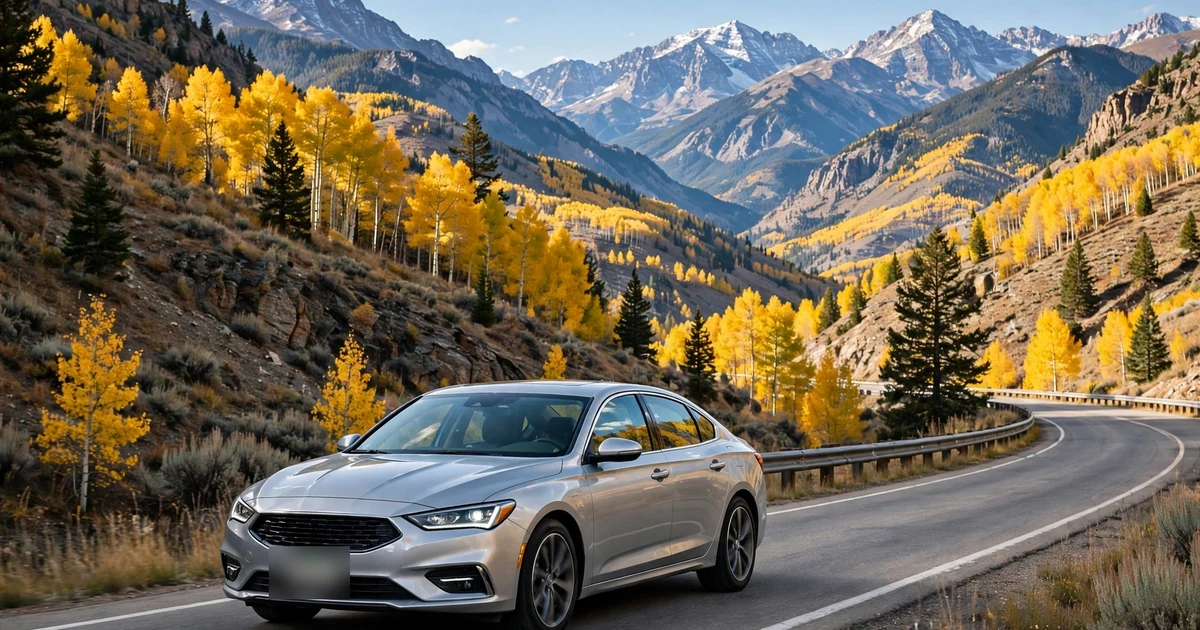
Colorado's car insurance minimum is easy to remember: 25/50/15. That means $25,000 of bodily injury liability per person, $50,000 per accident, and $15,000 of property damage liability. Those three numbers are the law in C.R.S. 10-4-620, and they have not changed since the law took effect in 2003 1.
But the three numbers are only the start of the story. Colorado is an at-fault state, so the driver who caused a crash pays for the damage. Two other parts of the policy matter just as much, and most guides skip them: uninsured motorist coverage and $5,000 of medical payments coverage, called MedPay. Both are included in your policy by default. You can turn them down only by rejecting them in writing. And the penalties for driving with no insurance at all are heavier than in most states — a criminal charge, not just a ticket.
This guide explains the whole system in simple words: the minimum limits and what they pay, the two coverages that come with your policy unless you say no, the fines and license suspensions for driving uninsured, the SR-22, what Colorado drivers actually spend, and what has — and has not — changed recently.
Colorado's minimum limits
| Coverage | Minimum required |
|---|---|
| Bodily injury liability, per person | $25,000 |
| Bodily injury liability, per accident | $50,000 |
| Property damage liability, per accident | $15,000 |
Source: Colorado Revised Statutes 10-4-620; Colorado Division of Motor Vehicles 1 2.
The three numbers work like this. The first number is the most your insurer will pay for injuries to one person in a crash you cause. The second is the most it will pay for injuries to everyone hurt in that crash put together. The third is the most it will pay for damage to other people's property, such as their car, a fence, or a building.
One point trips people up: the $50,000 is a cap on all bodily injury payouts in one crash, not $25,000 plus $50,000. So a minimum policy pays at most $65,000 in total for one crash — $50,000 for injuries plus $15,000 for property damage. A single serious injury can cost far more than $25,000, and a multi-car crash can pass $50,000 fast. Anything above the limits is your problem, unless you buy higher limits.
Colorado is an at-fault state. That means after a crash, the driver who caused it is responsible for the harm, and their liability insurance pays the other driver's medical bills, lost wages, and car repairs. Colorado once had a no-fault system, in which each driver's own insurance paid their own medical bills no matter who caused the crash. The state ended that system on July 1, 2003, when the law that set the 25/50/15 minimums took effect 1.
If you move to Colorado, the Division of Motor Vehicles expects you to show proof of active Colorado auto insurance, and to transfer your license within 30 days and your title and registration within 90 days 2.
Our guide to liability car insurance explains how liability limits work in general, and our guide to car insurance requirements covers the basics for all states.
What the minimums do not cover
The minimums only pay other people. They do not pay for your own injuries, and they do not pay to fix your own car. If you cause a crash and only carry 25/50/15, your own medical bills and your own car repairs come out of your pocket — except for the $5,000 of MedPay explained below, which does pay your medical bills.
The minimums also do not cover damage from theft, fire, hail, or a crash with an animal. Those need comprehensive coverage. Damage to your own car in a crash you caused needs collision coverage. Neither is required by Colorado law, but a lender will usually require both if you still owe money on the car.
This is why the state minimum is a legal floor, not a recommendation. Many Colorado drivers buy higher liability limits — 100/300/50 is a common step up — because the price difference is often small compared with the extra protection. Before you settle for the minimum, ask your agent what the next level up would actually cost.
Uninsured motorist coverage: included unless you reject it in writing
This is the most misunderstood part of Colorado car insurance. Uninsured and underinsured motorist coverage — UM/UIM for short — is not legally required to carry. But your insurer must include it in your policy unless you reject it in writing. That is the rule in C.R.S. 10-4-609: a liability policy issued in Colorado must provide uninsured motorist coverage, unless "the named insured rejects the coverage… in writing" 3.
The law also says the insurer must offer you UM coverage in an amount equal to your bodily injury liability limits. So on a minimum policy, that means UM/UIM at 25/50. And UM coverage in Colorado includes underinsured motorists — drivers who have insurance, but not enough to pay for the harm they caused 3.
Why does this matter? Because about one in five Colorado drivers has no insurance at all, as the section near the end of this guide explains. If one of them hits you, your own UM/UIM coverage is what pays your medical bills and lost wages. Without it, you may have to sue a driver who has nothing to pay with.
Some guides say UM/UIM and MedPay are "not mandated" in Colorado. That is technically true but misleading. You are not forced to keep them — but they are in your policy from the start, and they leave only if you sign a written rejection. Check your policy's declarations page before you assume you turned them down.
One exception is worth knowing: drivers for a transportation network company, such as a rideshare driver on a prearranged ride, may not reject UM coverage. That rule came from a 2022 law, HB 22-1089 3.

MedPay: $5,000 included by default
MedPay is the other coverage that comes with a Colorado policy unless you say no. C.R.S. 10-4-635 says no auto liability policy may be delivered in Colorado unless it provides medical payments coverage "with benefits of five thousand dollars" 4.
MedPay pays medical bills for you and your passengers after a crash, no matter who caused it. It is not the same as PIP — personal injury protection — which Colorado does not have since the no-fault system ended in 2003. MedPay is simpler and smaller: a flat $5,000 that pays fast, often before fault is even decided, and it can also cover things like ambulance rides and follow-up visits.
The rejection rules are strict, and they protect you. A policy may be issued without MedPay only if you reject it in writing, or in the same medium in which the application was taken — for example, online if you applied online. The insurer must keep proof of your rejection for at least three years. And if the insurer fails to offer MedPay, or cannot prove you rejected it, the policy is presumed to include the $5,000 benefit 4.
Five thousand dollars will not cover a hospital stay. But it covers the first bills — the emergency room visit, the X-rays, the first round of treatment — while the larger claim is sorted out. For most drivers, keeping it costs little, and it is the only coverage on a minimum policy that pays your own medical bills.
What happens if you drive without insurance
Driving without the required insurance in Colorado is a crime, not just a ticket. Under C.R.S. 42-4-1409, it is a class 1 misdemeanor traffic offense 5.
The fines are set by law, and the court has little room to go below them:
- First conviction: a mandatory minimum fine of $500. The court may suspend up to half of the fine if you show that you have since bought appropriate insurance.
- Second or later conviction within five years: a mandatory minimum fine of $1,000, and the court shall not suspend any part of that minimum fine.
The court may also order not less than 40 hours of community service. Note the word "may" — community service is at the court's choice, not automatic. Several guides state it as if every first offense brings community service. The statute says the court may order it 5.
There is one safeguard many guides omit. You shall not be convicted if you produce in court a real, complying policy that was in force at the time of the stop. In other words, if you actually had insurance but could not prove it at the roadside, the charge goes away. The court clerk may dismiss the case after checking the state's uninsured motorist identification database, known as the MIIDB, which insurers report to 5.
Showing your policy on a cell phone or other electronic device counts as valid proof. The officer may not look through the rest of your device 5.
Do not confuse the no-insurance fine with the general range for a class 1 misdemeanor traffic offense, which runs up to one year in jail and up to a $1,000 fine. The $500 and $1,000 figures above are the minimums that apply specifically to driving without insurance 5.
License suspension: a separate ladder
On top of the criminal fine, the Division of Motor Vehicles can suspend your license under C.R.S. 42-2-127.7. This is an administrative suspension, separate from the court case, and it follows its own ladder 6:
| Determination | Suspension |
|---|---|
| 1st | Until you furnish proof of financial responsibility — no fixed calendar period |
| 2nd within 5 years | 4 months |
| 3rd or later | 8 months |
Source: Colorado Revised Statutes 42-2-127.7 6.
So a first offense ends the suspension as soon as you show proof of insurance. A second offense within five years costs four months without a license, and a third costs eight months — even if you buy insurance in the meantime.
SR-22: proof you are insured again
An SR-22 is not an insurance policy. It is a form your insurer files with the Division of Motor Vehicles to prove you have coverage. The Colorado DMV's SR-22 page says it plainly: the SR-22 "is not an insurance policy," it is a certificate the insurer files, and the insurer must tell the DMV if it is cancelled 7.
You will usually need an SR-22 to get your license back after an insurance-related suspension, or after a DUI or DWAI revocation. You can file it online through myDMV.Colorado.gov, or by mail with the reinstatement application, Form DR 2870 7.
How long it lasts: three years in most cases. The DMV's form DR 2316, "Financial Responsibility Requirements," says to "submit an SR22… and maintain the SR22 continuously for three years following your submission" 8. The three-year clock starts when you submit it, at reinstatement — not at the date of the offense.
The warning matters more than the number. The DMV says: "If you don't keep the SR-22 current… Your driver license will be suspended for that reason alone." A lapse restarts the problem, even if you did nothing else wrong. Keep the SR-22 current for the full three years, and confirm with your insurer that it stays filed 7.

What Colorado drivers actually spend
According to the National Association of Insurance Commissioners, Colorado drivers spent an average of $1,601 per insured vehicle in 2024 across all policy types. That is what drivers actually spent on average — it is not a quote for one driver profile. The countrywide average that year was $1,432. Colorado's figure was $1,450 in 2023, so spending rose about 10.4% in one year 9.
Quote studies give different numbers because they price one made-up driver, not the whole state. NerdWallet's November 2026 analysis, for a 35-year-old driver with good credit and a clean record driving a 2023 Camry LE, with 100/300/50 limits plus UM coverage and $1,000 deductibles, put Colorado full coverage at $3,283 a year and minimum coverage at $742 a year 13. NerdWallet's own average-cost page gives a national figure of $2,357 a year for full coverage and $650 for minimum coverage 12.
Treat any single quote-study number as what it is: a median quote for one standard driver on one date. The NAIC figure of $1,601 is the better anchor for what Colorado drivers actually spend, because it covers every policy type and every driver in the state 9.
One in five Colorado drivers has no insurance
The Insurance Research Council estimated that 19.7% of Colorado drivers were uninsured in 2023 — the ninth highest rate in the country. The national rate that year was 15.4% 10 11.
That figure is worth getting right, because several guides still print the older number. The 2022 estimate was 17.5%, and it still appears on older pages. The current figure is 19.7%, from the IRC's 2017–2023 report. The IRC builds its estimate from the ratio of uninsured-motorist claims to bodily-injury claim counts — it is an estimate, not a count of uninsured cars — but it is the standard measure every state comparison uses 10.
The practical point is simple. In Colorado, roughly one driver in five carries no insurance at all. If one of them hits you, your UM/UIM coverage and your MedPay are the two things standing between you and a bill you pay yourself. Both come with your policy unless you reject them in writing, and both cost far less than the crash they protect against.
What changed recently
The short answer: nothing changed in the minimum limits. The 25/50/15 minimums have been the same since 2003, and multiple 2026 guides confirm they did not change for 2026 1.
One new law from 2024 is worth a single line, even though it is not an insurance change. SB 24-079, known as lane filtering, lets motorcycles filter past stopped traffic at low speed. It changes how motorcycles move in traffic, not what insurance they must carry.
Verified against the Colorado Revised Statutes and the Colorado Division of Motor Vehicles on November 18, 2026.
The bottom line
Colorado's minimum is 25/50/15, and it has been the same since 2003. It pays other people when you cause a crash, up to $50,000 for injuries and $15,000 for property damage in total. It does not pay your own medical bills or fix your own car.
The two coverages that come with the policy matter just as much as the three numbers: $5,000 of MedPay and uninsured motorist coverage, both included unless you reject them in writing. With about one in five Colorado drivers uninsured, keeping them is usually the safer choice. And driving with no insurance at all is a misdemeanor with a $500 minimum fine the first time and $1,000 the second — plus a license suspension that gets longer each time. Buy the insurance, keep the proof in the car, and check your declarations page before you sign away the coverages that came with it.
Frequently asked questions
- What is the minimum car insurance required in Colorado?
- The minimum is $25,000 of bodily injury liability per person, $50,000 per accident, and $15,000 of property damage liability — written as 25/50/15. The law is C.R.S. 10-4-620, and the limits have been the same since 2003. Your policy also includes $5,000 of MedPay and uninsured motorist coverage by default, unless you reject them in writing.
- Is Colorado a no-fault state?
- No. Colorado is an at-fault state. The driver who caused the crash pays for the damage, through their liability insurance. Colorado had a no-fault system once, but the state ended it on July 1, 2003. Colorado has no PIP coverage; instead it has MedPay, which pays medical bills no matter who was at fault.
- How much is the fine for driving without insurance in Colorado?
- A first conviction carries a mandatory minimum fine of $500, and the court may suspend up to half of it if you show you have since bought insurance. A second conviction within five years carries a mandatory minimum fine of $1,000, which the court may not suspend. Driving without insurance is a class 1 misdemeanor traffic offense, and your license can also be suspended.
- Does Colorado require uninsured motorist coverage?
- You are not required to keep it, but your insurer must include it in your policy unless you reject it in writing. The insurer must also offer it at limits equal to your bodily injury liability limits. With about one in five Colorado drivers uninsured, keeping it is usually the safer choice.
- What is MedPay in Colorado, and do I have to buy it?
- MedPay is medical payments coverage of $5,000. It pays medical bills for you and your passengers after a crash, no matter who caused it. Every Colorado auto liability policy must include it unless you reject it in writing. If the insurer cannot prove you rejected it, the policy is treated as including the $5,000 benefit.
- How long do I need an SR-22 in Colorado?
- In most cases, three years. The SR-22 is not an insurance policy — it is a form your insurer files with the DMV to prove you have coverage. You must keep it current for three years after you submit it. If it lapses, your license will be suspended for that reason alone.
Sources
Numbers in the text point to these publications. Links open the original source.
- Justia / Colorado Revised Statutes. Colorado Revised Statutes Section 10-4-620 (2025) - Required coverage
- Colorado Department of Revenue, Division of Motor Vehicles. Welcome to Colorado
- Justia / Colorado Revised Statutes. Colorado Revised Statutes Section 10-4-609 (2025) - Insurance protection against uninsured motorists - applicability
- Justia / Colorado Revised Statutes. Colorado Revised Statutes Section 10-4-635 (2025) - Medical payments coverage - exceptions - definitions
- Justia / Colorado Revised Statutes. Colorado Revised Statutes Section 42-4-1409 (2025) - Compulsory insurance - penalty - legislative intent
- Justia / Colorado Revised Statutes. Colorado Revised Statutes Section 42-2-127.7 (2025) - Authority to suspend driver's license - uninsured motorists - legislative declaration
- Colorado Department of Revenue, Division of Motor Vehicles. SR-22 and Insurance Information
- Colorado Department of Revenue, Division of Motor Vehicles. DR 2316 Financial Responsibility Requirements
- National Association of Insurance Commissioners (NAIC). 2024 Auto Insurance Database Average Premium Supplement (published September 2026)
- Insurance Research Council (IRC). Uninsured and Underinsured Motorists: 2017-2023, news release of February 20, 2025
- Insurance Information Institute (Triple-I). Top 10 Highest And Lowest States By Estimated Percentage Of Uninsured Motorists, 2023
- NerdWallet. Average Cost of Car Insurance (November 2026 rate analysis)
- Prime Capital Report. Car Insurance Cost by State 2026: All 50 States Ranked
Related guides
- Car Insurance Requirements by State: Minimum Coverage in All 50 States
The minimum car insurance required in every state and D.C. in 2026, the states that raised their limits in 2025 and 2026, and how to confirm your own.
- Liability Car Insurance Explained: Coverage, Limits and Costs
What liability car insurance covers, how to read limits such as 30/60/25, what each state requires, what it costs on average and how much to carry.
- Car Insurance Quotes: How to Compare Rates and Coverage
What a car insurance quote is, what information you need, where to get quotes and a checklist for comparing them on equal terms.
This guide is general educational information, not insurance, legal or financial advice. Insurance rules and prices vary by state, company and personal circumstances. Confirm anything important with your state insurance department or a licensed professional. Read the full disclaimer.